
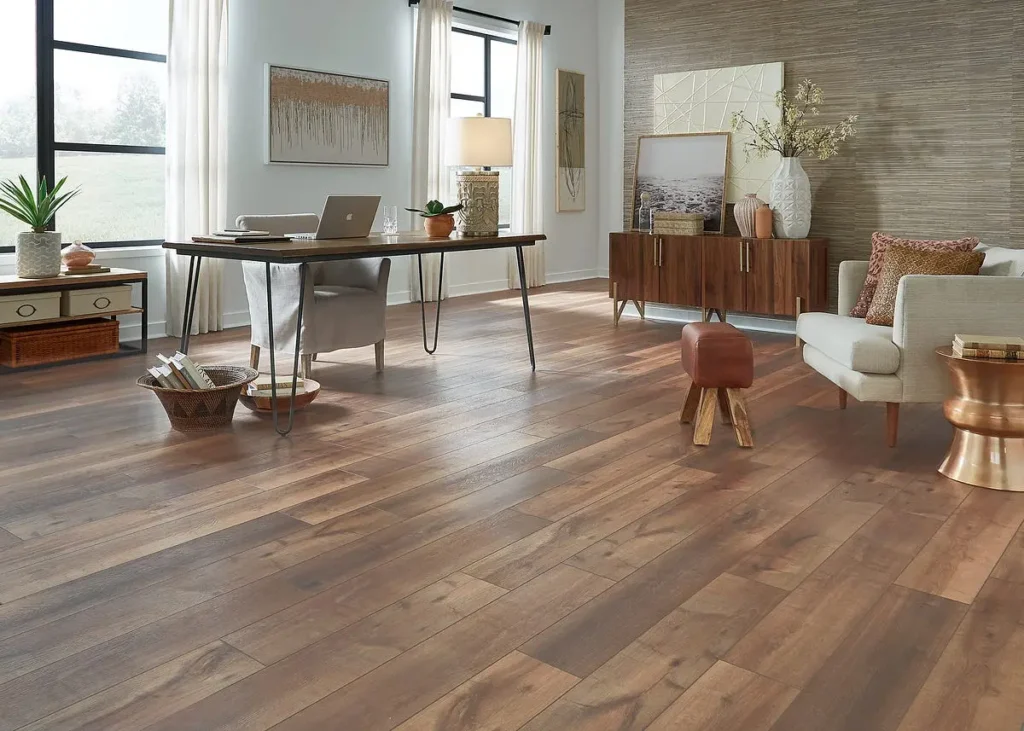
Residential vinyl plank flooring is popular for home renovations because it makes a difference. Imagine having the classic, warm beauty of hardwood at a fraction of the cost with the robustness to withstand spills, pets, and daily wear. Vinyl plank is a popular choice because it looks good, lasts a long time, and is a good value for the money compared to natural wood or stone.
Before you fall in love with the thought of gorgeous floors throughout your home, homeowners must understand the cost per square foot. Misunderstanding flooring can turn an optimistic remodel into a costly one, especially when material, labor, and preparation are involved.
Professionals estimate vinyl plank installation costs between $4–$11 per square foot, depending on quality, labor rates, brand, and feature. This matches most U.S. regions’ vinyl plank flooring labor cost per sq ft.
Knowing these estimates before renovating a room or replacing all the flooring will help you make good spending selections. This guide shows how material quality, installation difficulties, and local price effect cost per square foot. This lets you plan your project without surprises.
What Is Vinyl Plank Flooring? Types & Features
Luxury Residential Vinyl Plank Flooring mimics natural wood or stone but is more durable and moisture-resistant than vinyl or laminate. LVP, unlike traditional sheet vinyl, in individual planks, mimics wood-plank appearance by locking together or adhering to the subfloor.
Core Types & Construction
Due to its waterproof vinyl core, high-resolution printed graphic layer, and protective wear layer that resists scratches, stains, and dents, Residential Vinyl Plank Flooring is ideal for busy families with pets or children
Some types have a stiff core like SPC (Stone Plastic Composite) to make them more stable and resistant to impact.
Installation Methods
The three primary installation styles are:
- Click-Lock design allows planks to “float” above the flooring, making it ideal for DIY projects and faster installation.
- The glue-down method adheres planks to the subfloor for a durable finish, ideal for high-traffic areas.
- Loose-Lay, heavy planks that adhere with weight and friction, requiring minimum adhesive.
Key Features at a Glance
- Kitchens, baths, and basements benefit from waterproof, low-maintenance.
- Designed for daily use, durable and scratch-resistant.
- Wide aesthetic spectrum, resembling wood, stone, and other premium materials.
Typical Cost to Install Vinyl Plank Flooring (Per Sq Ft)
Avoid surprises by knowing the installation cost per square foot when budgeting for Residential Vinyl Plank Flooring. The cost of installation includes floor materials, professional labor, and any additional work. Recently released cost guidelines estimate that luxury Residential Vinyl Plank Flooring, a popular alternative to standard flooring, will cost $4–16 per square foot nationwide in 2025–2026.
Typical Installed Cost Ranges
- Standard Range: Most homeowners spend $4–$16 per sq ft for LVP, depending on location and installer.
- Lower End: Some quotes start as $2.50 per sq ft for basic supplies and installs.
- Higher End: In high-end neighborhoods or with premium materials and detailed work, expenses might reach $13-16+ per square foot.
Material/Labor Costs
Separating what you are paying for helps you understand that installed figure:
Materials
LVP product prices vary from $2 to $10 per sq ft, according to quality, core type (rigid or standard), and wear-layer thickness. This pricing forms the foundation of a clear vinyl plank flooring price breakdown for homeowners.
Professional Labor
Labor costs for Residential Vinyl Plank Flooring installation range from $2 to $6 per sq ft, with simpler floating or loose-lay systems costing less and more elaborate glue-down projects costing more.
Why Installed Costs Vary
The final per-square-foot price depends on several factors:
- Region and labor demand: Cities have higher labor rates.
- Room complexity: Complex rooms with odd shapes, corners, and stair transitions take longer to install.
- Subfloor prep: Leveling or repairing the subfloor increases costs.
Breakdown of Cost Components
Residential Vinyl Plank Flooring installation costs are influenced by a variety of things. When you compare prices, knowing these pieces will help you avoid budget shocks.
Material Costs
In 2025–2026, vinyl planks cost $2–8 per square foot, depending on quality and features.
- Budget Materials: $2–$4 per sq ft, thinner wear layers, minimal graphics.
- Mid-Range LVP: $3-$6/sq ft, balancing durability and attractiveness.
- Premium Products: $6-8+/sq ft for harder wear layers, stiff SPC cores, or HD wood graphics.
What Drives Material Cost?
- A thicker wear layer increases scratch and dent resistance but costs more.
- Rigid cores (SPC or WPC) are more stable and costlier than flexible vinyl.
- Designs with more realistic wood or stone appearances cost more.
Labor Cost
Professional installation labor varies a lot depending on the method, the scope, and the state of the market in the area.
Typical Labor Ranges:
- Basic click-lock or floating systems cost $1.50-$3 per sq ft, where planks snap together.
- The average vinyl plank installation cost for homes is $2–$6 per square foot, including material cutting, layout, and fitting.
- Labor costs for complex glue-down installations might reach $4-7+ per sq ft due to the need for adhesives and precision.
Factors Influencing Labor Cost:
- Floating flooring is easier and cheaper to install than glue-down systems.
- Installation takes longer with corners, angles, and stair transitions.
- Installer experience and regional labor rates: Urban areas can cost more than rural installations.
Additional Charges
Flooring prices include additional expenditures beyond materials and labor:
Old Flooring Removal:
Removing old flooring (carpet, tile, laminate) typically costs $0.50-$2.50 per sq ft, depending on material type and difficulty.
Subfloor Preparation:
Before installation, uneven or broken subfloors may require leveling or repair, which can cost $1-$3 per sq ft.
Underlayment & Accessories:
Although some LVP models contain underlayment, separate underlayment costs $0.50–$1 per sq ft for comfort and sound management.
Finishing entrances and room changes requires $1–$5 per linear foot transition strips and trim.
Furniture Moving & Waste Disposal:
Installers may charge extra for moving furniture or disposing of garbage, especially in larger projects.
Regional Variations:
In the U.S., installation prices and related charges vary widely by region. Labor and disposal costs are typically higher in high-cost cities than in smaller markets.
DIY Installation vs Professional Installation
DIY versus professional vinyl plank flooring installation can affect project cost, timeline, and outcome. Understanding the pros and cons of each strategy might help you choose the best one for your home improvement.
DIY Installation: Save on Labor, Invest in Time
Cost savings are a major draw for DIY flooring. By installing yourself, you avoid expert labor costs, which can add several dollars per square foot. DIY methods can save up to $2,000-$3,500 on a 1,000-sq-ft work compared to paying pros. The average DIY cost for a 1,000-sq-ft LVP installation is $1,500–$3,000, which includes materials but not labor, making it a form of low-cost vinyl plank flooring installation for skilled homeowners.
Pros of DIY:
- Reduced cost: No labor fees, often $1.50-$5.00 per sq ft when done properly.
- Flexible scheduling: You can spread tasks out.
- Satisfying project: DIYers like feeling accomplished.
Cons of DIY:
- Time and effort: Subfloor prep, measuring, cutting, and fitting might take days for untrained individuals.
- Tool costs: Buying or renting tools adds up.
- Mistakes can cost more: Poor installation can cause gaps, uneven boards, and costly repairs.
Professional Installation: Expertise & Warranty
Hire a pro to install Residential Vinyl Plank Flooring fast and effectively. Professional installers use specialized tools, can manage complicated cuts, transitions, and subfloor issues, and may offer warranties.
Benefits of Professional Installation:
- Expert craftsmanship: Fewer faults that could limit flooring life.
- Fast completion: Pros usually complete faster than DIYers.
- Warranty support: Many contractors offer warranties.
Considerations:
One factor to consider is the higher upfront cost of labor, which can add $2-6 per square foot on top of material expenses.
Less personal control: You must arrange schedules and trust the installation.
Which Is Right for You?
DIY installation can save money if you enjoy hands-on projects, have basic construction skills, and have a simple room layout. If your room is vast, oddly shaped, or you want professional quality and warranty coverage, hiring an installation may be worth it.
Tips for Getting Accurate Quotes
Getting accurate Residential Vinyl Plank Flooring installation quotes helps you budget and avoid surprises. How to get reliable, comparative contractor estimates:
Provide Detailed Project Information
Be specific about your project before getting a quote. Help contractors understand the project by precisely measuring and communicating room dimensions. Give them your flooring preferences (e.g., vinyl plank) and whether you need any floors removed. Visit the location to evaluate the flooring and any access issues like doorways or stairs that could hinder installation for a more accurate price. Avoids expense underestimation later and leads to a more reliable flooring installation cost estimate.
Ask for Itemized Quotes
An itemized estimate is essential since it breaks down costs into materials, labor, subfloor prep, and other extras (removal, trim). This breakdown simplifies comparing bids and identifying hidden fees or greater value. It helps you track money and change the project if needed.
Compare Multiple Contractors
At least three expert quotes will give you an idea of local prices. Consider more than the lowest price. Compare contractors’ work quality, reputation, and start-to-finish time. This helps you estimate correctly and avoid overpaying for goods and labor.
Clarify What’s Included
Before work begins, you may find that the first quotation was competitive but later increased. Always ask contractors what their quote includes and excludes. Does it include old flooring removal? Moving furniture? Debris disposal? Knowing these details before starting the job minimizes unexpected charges that could blow your budget.
Confirm Warranty & Timeline
When choosing contractors, inquire about flooring and installation warranties. Knowing how long and what these warranties cover protects you from installation errors. Check completion date. Clarify start and end times to avoid delays.
Conclusion — What to Expect & How to Budget
The cost per square foot for Residential Vinyl Plank Flooring, which is around $4–16 for most residential projects, helps you budget your renovation.
Estimate installation costs for labor, subfloor preparation, previous flooring removal, underlayment, and transition strips. These can impact project budgets if disregarded.
For financial stability, request multiple detailed quotes from reliable installers and ask about extras. This ensures fair bid comparison and informed material and service selection. Choose accurate estimates over the lowest offer to avoid quality issues and hidden costs. With careful planning and contractor communication, especially with skilled residential estimating services, you can budget and manage expectations for a vinyl plank flooring renovation that increases your home’s value and beauty.