
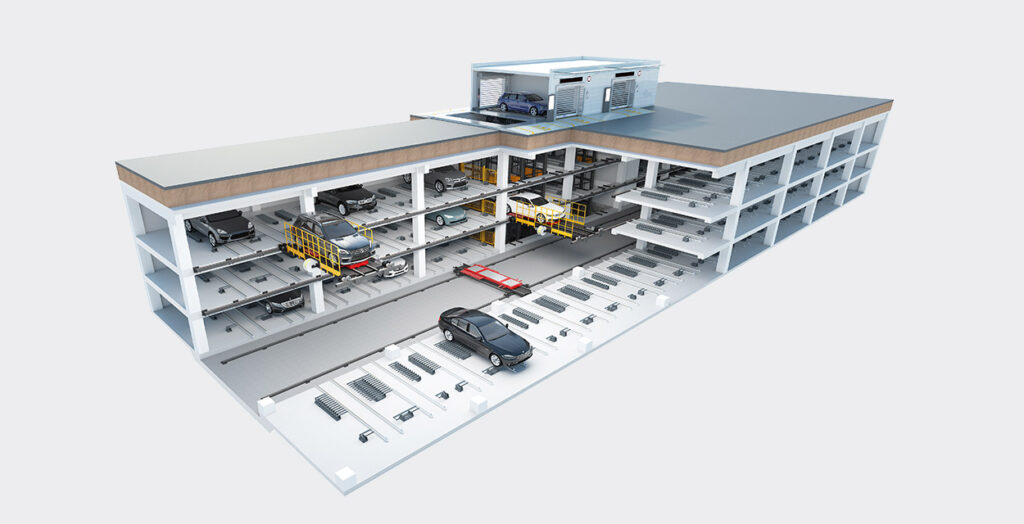
Digital technologies simplify and improve parking for drivers and managers in smart parking structures. Sensors, cameras, and software in smart parking systems monitor spaces, direct vehicles, control access, and simplify payments. They do not need attendants or static signs.
Smart parking uses a network of IoT devices, such as occupancy sensors, license plate recognition cameras, and automatic payment systems, to gather and process data on how parking is used. Drivers get quick space advice, the ability to book spaces through a mobile app, and the ability to pay without touching anything. Operators get data on how to manage their money and how to use their space.
As more people move to cities and more cars are on the road in US cities, smart parking garages are becoming an important part of the infrastructure. These systems improve mobility and urban life by lowering search time, congestion, and facility management. This guide will help you plan by telling you how much it costs to build a facility in the U.S., including technology and important prices.
You need to think about both the costs of building and the costs of technology when estimating how much it will cost to build a smart parking garage.
Traditional Parking Garage Construction Costs in the USA
Before adding smart technology to a parking facility, it is important to know how much it costs to build a regular garage.
Typical Cost Per Parking Space
In the U.S., the cost of constructing a normal parking lot depends on how it is built:
- Precast Concrete Parking Garages: Precast systems, which are subassembled on site, are cheaper and faster to install. Average above-ground building cost is $19,500 to $26,000 per sqm.
- Traditional Cast-In-Place Concrete Garages: While cast-in-place concrete (poured on-site) usually costs more because of the extra work and time needed to cure, averaging $31,500–$42,000 per spot, it does allow for custom design.
- Overall Range: Depending on complexity, location, and materials, traditional above-ground garages cost $20,000 to $50,000.
Cost Drivers & Influencers
The total cost of building is affected by a number of important factors:
- Work and Materials: Skilled workers and materials like concrete, rebar, and formwork make up a large part of the budget for building a garage.
- Site Preparation: Digging, grading, utilities, drainage, and permits all depend on the site and can add a lot of money to the project.
- Design Needs: Architectural finishes, ramps, stairs, lifts, and lighting systems all add to the cost.
- Land Prices and Urban Location: Projects cost more in cities where land is expensive and access is limited.
Also, the choice of structural method (precast vs. cast-in-place) can change how much work needs to be done and when it needs to be done.
Above-Ground vs. Underground Structures
Underground parking facilities can cost $25,000–$50,000+ per space owing to excavation, groundwater control, and shoring, while above-ground garages are cheaper.
What Makes a Parking Garage “Smart”?
A smart parking garage uses linked technology to monitor, manage, and optimize parking operations in real time. These technologies help drivers find their way faster, reduce traffic, and make it easier to access and pay for facilities. They also help facility owners see how their business is running.
Key Smart Parking Features That Add Value (and Cost)
Here are the main technologies that make a parking garage “smart,” as well as their prices to the overall project:
- Occupancy Sensors & Real-Time Detection: Each parking place has sensors that tell a central system if it is full or empty. They use ultrasonic, infrared, magnet, and radar sensors. Real-time information saves drivers time finding open spots.
- Parking Guidance Systems & Digital Signage: Integrated guidance systems use sensors that give information in real time to show on overhead signs which places are open and help drivers get through a building quickly. This helps reduce overcrowding and improve flow.
- Automated Access Control & License Plate Recognition (LPR): Automatic entry and exit with LPR or RFID technology is safer, allows permit checks, and helps businesses operate without cash.
- Mobile App Integration & Digital Payments: Drivers can reserve and pay for spaces using cellphones or contactless kiosks. Integrated payment methods make people less necessary and make customers happier.
- Real-Time Dashboards & Analytics: Facility operators learn about things like occupancy rates, peak usage times, and income. This lets them make decisions based on data and run things more smoothly.
- EV Charging & Future-Ready Infrastructure: Smart garages increasingly have electric vehicle charging stations and future transportation infrastructure, exhibiting long-term value and adaptability.
Smart Management vs. Robotic Parking
Smart management systems use IoT, sensors, software platforms, and analytics, while fully automated robotic parking systems move automobiles into storage racks. Robotic systems require a lot less room, but they have a different cost structure than smart management systems that make things more efficient and improve the user experience.
Cost Breakdown: Smart Parking Systems & Technologies
Before determining the cost of a smart parking garage, it is vital to identify its unique technology. Here is a close look at the costs of the main smart parking parts and methods.
Smart Sensors and Guidance Systems
Real-time space detection and guidance help cars quickly find and get to an open spot in a smart garage.
- LED Indicators and Occupancy Sensors: The device can detect stall theft by placing sensors in each parking spot. Advanced ultrasonic or IoT-enabled space monitors cost $300–$500 per space. This depends on the technology, installation difficulty, and local labor rates. These sensors contain LED lights or digital indications to help drivers navigate.
- Infrastructure Costs: Installing the sensor devices into place needs data cabling, power distribution, wireless communications infrastructure, and signs. This makes the project more expensive in terms of both materials and labor.
Smart guidance systems make a big difference in how users feel about the system and how quickly drivers can find what they are looking for. This also helps prevent traffic jams in the building.
Parking Management Software & Integration
Along with hardware, a smart parking garage also needs software tools to keep track of data, performance, and user interfaces.
- Platforms for management and dashboards: systems that combine sensors, dashboards, analytics, and user interfaces can be very different in terms of cost. Basic modular parking management software usually costs between $20,000 and over $30,000 in total, based on the features and size.
- API & Analytics Integration: API and custom module integration may be needed to support mobile apps, automatic payments, and analytics in real time. The cost of software goes up with a higher level of customization and inclusion of outside tools.
To make sure that devices, user applications, and facility processes can work together in real time, you need to have good software.
Automated / Robotic Parking Technology
These systems dramatically change how space and workflow are used by parking and retrieving cars without human drivers, but they vary greatly in cost.
- Automated Parking Systems: Depending on technology, capacity, and automation complexity, automated parking systems can cost $9,000–$50,000+ per location.
- Semi-Automated versus Fully Automated: Lower-end mechanical stackers, elevators, and puzzle parking solutions are simpler than fully robotic systems with vehicle shuttles and significant control logic.
- Value Considerations: Robotic systems are more expensive at first, but they can save a lot of room (up to double the capacity in the same footprint), lower the costs of operating and lighting, and reduce the need for ventilation.
Real-World Cost Examples & Variations
When planning a budget for a smart parking garage, developers and people who make decisions can better plan if they know about prices in the real world. The following are clear examples and differences in cost from recent construction statistics in the United States.
Typical Total Garage Construction Cost (Traditional)
The national average is a normal multi-level parking lot with around 150,000 square feet of space. In the United States, most projects cost about $9.75 million, with prices usually ranging from $7.5 million to $12 million per foot. This range applies to buildings built above ground that do not have a lot of automated or smart systems.
- Costs are usually estimated at about $50 to $80 per square. for just the building, not the land or any other costs.
- Industry cost guides also show that building each stall usually costs between $21,000 and $30,000 in multi-level garages.
Impact of Location & Land Prices
- Urban vs. Suburban: Urban labour, permitting, and logistical costs can boost project budgets by 10-30%, depending on local labour markets.
- Land Costs: In areas where land is scarce and zoning restrictions require the best locations, buying land may cost more than building on it.
Smart Systems & Return on Investment (ROI)
Smart technology like occupancy detection, guidance systems, and automated payments increase upfront costs but boost revenue and efficiency:
- Lower Operating Costs: Automated entry and smart parking guidance systems lower the cost of daily management and the need for staff.
- More Money: Smart systems can increase revenue by increasing utilization rates and reducing driver cruising time, resulting in ROI within 24 to 36 months due to rapid adoption and efficiency advantages.
- More Usage: Data-driven management makes it possible to use dynamic pricing and room optimization to get the most people possible in the space during busy times. This leads to better yearly revenue per space.
Five Key Factors That Influence Total Cost
A US smart parking lot’s cost depends on several factors beyond construction. Budgeting, feasibility studies, and long-term financial planning need understanding these factors.
Site and Land Costs
Land is frequently the biggest budget item in city building projects. Cities like New York, San Francisco, Boston, Seattle, and Los Angeles are far more expensive than suburbia. Site conditions are also important. Moving utilities, digging into rock, stabilizing the soil, and cleaning up the environment can each add millions of dollars to the total cost of a project. Central business areas also have higher staging and logistics costs because of traffic problems.
Garage Design and Structure
Each parking space’s cost is affected by how it is designed.
- number of levels
- footprint and layout efficiency
- ramp vs. flat‐plate systems
- structural system (precast vs cast-in-place)
- underground vs above ground
Due to excavation, dewatering, and shoring, underground garages cost the highest. Multi-level above-ground precast structures are usually the cheapest way to get more than one room.
Technology Complexity and Integration
For a parking garage to be smart, it must be able to:
- occupancy sensors
- guidance lighting and signage
- license plate recognition (LPR)
- automated payment and mobile apps
- centralized management software
As the number of subsystems and the amount of automation go up, the cost increases too. Fully robotic parking and shuttle systems are the most expensive, but they make the best use of space.
Local Codes and Accessibility Requirements
- Compliance rules like
- fire-life-safety systems
- seismic design in California and the West Coast
- ADA parking requirements
- stormwater and sustainability compliance
All of these have an impact on the cost and style. Seismic and hurricane-zone structural requirements might raise prices by 10–25%.
Soft Costs: Design, Permitting, Engineering, and Contingency
The soft costs, which cover the following, usually make up 20–30% of a project’s total cost:
- architectural and engineering design
- permitting and approvals
- geotechnical and environmental studies
- legal fees
- financing costs
- contingencies for escalation and risk
Because the prices of concrete, steel, and labor have been changing, escalation has been very important lately.
Partner with Fusion Estimating for Accurate Smart Parking Garage Cost Estimates
Many smart parking garage projects fail due to unreliable cost estimates. Developers face unpredictable material pricing, labor rates, technological expenses, city-specific code requirements, and late-project budget overruns. Generic per-space cost ranges do not help lenders or decision-makers and often put projects on hold.
Fusion Estimating is exactly what you need in this situation. For both smart parking garages and automated parking systems, we give precise, data-driven cost estimations.
Our estimations take into account market price, local construction conditions, sensors and guidance systems, EV charging, automation equipment, software integration, and escalation trends, not old averages. We provide precise quantity takeoffs and line-item budgets to show where every dollar goes and how design choices affect cost.
We help you assess scenarios and determine the most cost-effective way to reduce overruns, redesign, and funding delays for above-ground, underground, precast, or fully robotic projects.
Start a smart parking garage project or evaluate viability with Fusion Estimating’s no-obligation project discussion and budget evaluation. We will help you understand the real costs, risks, and choices so you can be confident of what you are doing.