
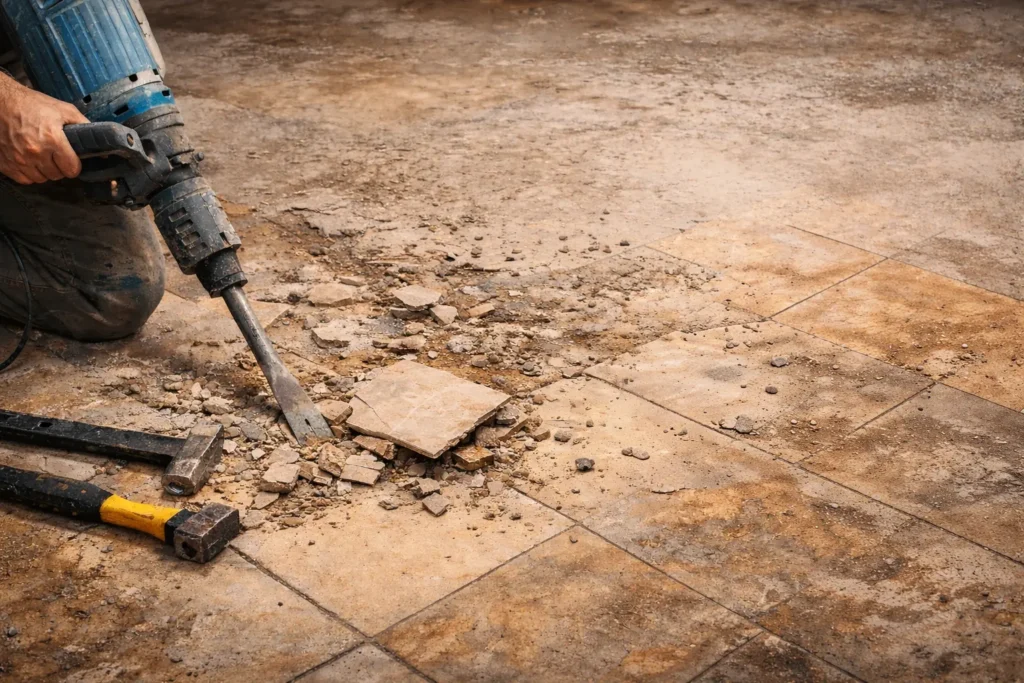
As with many renovations, removing old floor tiles takes longer and costs more than expected. Before disposal and dust control, grout, thinset, and subfloor repairs can complicate destruction. That’s why it’s important to know the cost to remove floor tiles ahead.
This complete guide shows how much it really cost to remove floor tiles across the United States. It gives you choices like whether to do it yourself or hire a professional, as well as national price ranges and the main things that affect prices. This article will help you make a solid budget whether you want to update your kitchen, bathroom, or home’s floors.
There are projects where you can pay someone $2 to $7 per square foot to take out the tiles. The average cost per square foot is $3.50 nationwide. Depending on distance and difficulty, the cost to remove floor tiles can range from a few hundred dollars to over a thousand.
For homeowners considering floor remodeling or replacement, this article provides an up-to-date, realistic estimate of what it would cost to remove floor tiles and how to accomplish it.
Understanding Tile Removal Costs: The Basics
To properly install new flooring, removing old floor tile is a multi-step process that includes breaking up and removing the tile, throwing away the waste, and cleaning the underlayment. Professional cost estimating services include labor, equipment, disposal, and occasionally site protection.
What Tile Removal Really Includes
When an expert gives you a price for removing tiles, that price usually includes:
- Demolition: Breaking up tile and the mortar beneath it with chisels, hammers, or power tools.
- Debris removal: Putting tile and mortar pieces in bags and hauling them away.
- Disposal: Fees for renting dumpsters or going to the landfill with construction waste.
- Cleanup: Sweeping, cleaning, and getting the floor ready for the next step, which could be repair or installation.
The fee includes these items since removing tiles creates a lot of dust and debris that must be cleaned up properly and swiftly.
Average Cost Per Square Foot
Expert ceramic tile removal costs $2–7 per square foot in the U.S., with ordinary ceramic or porcelain floor tiles costing $3.50.
Workload and tools used vary, with jobs that need specialized dust-free systems or tougher tiles (like stone) being closer to the higher end.
Typical Project Totals
Flooring demolition costs for the whole project vary a lot because homes are different sizes. As of recently, the average tile removal cost of a room flooring was $560. Most people spend between $320 and $1,120 on the whole process.
Smaller rooms under 50 square feet may cost a few hundred dollars. Larger areas about 160 square feet can cost over four figures, especially with disposal fees and subfloor prep.
Why Costs Vary So Much
Removing tiles is not always the same task. Some important factors that cause prices to vary a lot are:
- Type of tile: Denser or more durable tiles, like real stone, take longer and more work to remove.
- Size and layout of the space: Overall, bigger rooms cost more, and working in tight spaces like corners or cabinets takes longer.
- Difficulty of disposal: How much hauling and dumpster rental costs add to the total depends on how much trash there is and how much the local landfill charges.
- Method and tools: Basic demolition tools are cheaper than more complicated systems that keep dust out, which cost more but are cleaner.
Cost Breakdown: Per Square Foot and Total Project Examples
Knowing how much specialists charge per square foot and what that entails for different-sized rooms helps budget for floor tile removal. Regional, tile type, and workspace ease affect floor tile removal costs, however current national data provides reliable standards.
Per Square Foot Pricing
Professionals who remove tiles usually charge by the area they work on. The most recent cost guides say that contractor tile removal charges can be between $2 and $7 per square foot, with an average of about $3.50 per square foot for normal projects.
This range is based on normal removal using normal tools and workers. Because of the tools and containment measures needed, the price tends to be higher at the higher end of that range if you choose services that include dust-controlled systems or more thorough cleanup.
Most of the time, these prices per square foot include work and basic trash removal. However, they might not include more specialized services like subfloor repairs or handling dangerous materials, which cost extra.
Total Cost Examples by Room Size
Based on standard room sizes and prices, here are some estimated project cost to remove floor tiles ranges:
| Room Size (Approx. Sq Ft) | Typical Cost Range |
| Small bathroom (40–80) | ~$80 – $560 |
| Medium kitchen (100–200) | ~$200 – $1,400 |
| Large living area (300+) | ~$600 – $2,100+ |
Smaller rooms may cost a few hundred dollars, but huge areas might cost over two thousand dollars, depending on complexity and labor costs.
Example Scenarios from Real Jobs
These ranges reflect project costs. A homeowner stated they paid $2.75 to $3.65 per square foot to remove floor tiles in a medium-sized home. Contractor recruiting costs average this much.
What Factors Drive Tile Removal Costs
There is no standard cost to remove floor tiles; the time, labor, and supplies necessary vary every project. Knowing these aspects improves budgeting and prevents overspending.
Tile Type & Adhesive
The type of tile being removed has a big effect on the price. Conventional ceramic and porcelain tiles cost less per square foot because they are easy to remove. More dense stone, slate, and mosaic tiles need stronger wall adhesives. This takes more time, effort, and specific tools, increasing labor expenses.
Subfloor Conditions
What is under the tile determines the work. Laying tiles on smooth concrete makes them easier to remove. It may take longer if the tile is on a wood basis if the thinset (adhesive) is hard to remove. Damaged, rotting, or unlevel subfloors may cost extra. This is because workers may need to level or fix the surface after the job.
Room Configuration & Accessibility
Area layout and accessibility affect labor needs. It is harder and takes longer to remove tile in rooms with lots of corners, tight areas around cabinets, kitchen islands, or stairs, which adds to the overall cost. They also charge more for projects that need to move furniture or machines before they start working.
Location & Regional Labor Rates
The cost of labor varies by location. Contractor rates tend to be higher in cities and other places where living costs are higher, while they may be cheaper in rural areas. For example, local cost estimators show that in some cities, removing tiles can cost anywhere from $2.75 to $5 per square foot. This is because prices vary from place to place.
Equipment & Method Used
Using hand tools to do simple removals costs less but takes longer. Power tools speed up work but cost more. Dust-controlled tile removal systems cost $3–6.50 per square foot. These technologies purify indoor air and simplify cleanup.
Disposal & Dumpster Fees
Tile makes heavy waste. Contractors may charge more for removal even if they include hauling. A trash dumpster might cost several hundred dollars, depending on size and landfill fees.
Permits & Safety Testing
Some municipalities demand permits or safety tests before destroying. Mold and asbestos testing in older homes can be costly, especially if you need to remove it.
Hidden & Additional Costs You Might Not Expect
Even while tile removal charges include labor and disposal, hidden fees might raise the total payment. Before construction begins, these concerns are often hidden, driving up the cost to replace tile floor in bathroom, kitchen or other areas of homes.
Subfloor Repair or Replacement
In older or moist homes, removing tiles may reveal a broken, uneven, or rotting subfloor. Leveling the base is harder but prolongs floor life. Base damage to a 150- to 300-square-foot room is $3 to $10 per square foot, or $1,500 to $5,000.
Unexpected Mold or Water Damage
Hidden humidity can cause mold under tile. Mold removal can cost $10–30 per square foot and many thousand dollars for larger jobs.
Fixing water damage can cost more depending on its severity. Drying or replacing floors are examples.
Asbestos or Hazardous Material Removal
Old vinyl flooring or floor tiles in homes made before the 1980s may contain asbestos. Professional asbestos removal costs $5–$20 per square foot, more in more contaminated areas.
Dust Control & HEPA Filtration
Keeping dust inside saves the air quality inside, but it costs more. It may cost more per square foot to use advanced containment systems or HEPA filters than to use basic removal.
Disposal & Compliance Fees
Extra landfill or special disposal fees can happen because of heavy waste or local rules. A contractor may include these fees, but when they don’t, they come as surprises.
DIY vs Professional Tile Removal: What Costs to Expect
| Aspect | DIY Tile Removal | Professional Tile Removal |
| Cost | $1–$2 per sq ft (for tools and disposal) | $2–$7 per sq ft (includes labor, equipment, cleanup) |
| Time | Much longer (varies by room size) | Much faster (professionals are more efficient) |
| Skill Level | Requires physical effort and skill | Professionals with experience and tools |
| Equipment | Basic hand tools, safety gear, and rentals | Specialized equipment (e.g., dust control systems, power tools) |
| Risk of Damage | Higher risk (subfloor or surrounding areas can be damaged) | Lower risk (professionals avoid damage to subfloor and surrounding areas) |
| Disposal | Need to arrange for dumpster rental or disposal | Usually included (contractors handle debris and disposal) |
| When It’s Practical | Small spaces like bathrooms or utility rooms | Large rooms, tough materials (stone, mosaic), or when speed is a priority |
| Best for | Budget-conscious homeowners with time and energy | Homeowners looking for speed, quality, and minimal mess |
| How to Get an Estimate | Tool rental costs, self-assessment of time/effort | Get multiple quotes from contractors, asking for all-inclusive costs (labor, cleanup, disposal) |
How to Budget — Planning Your Tile Removal Project
You can not budget for tile removal by multiplying cost per square foot by room size. Plan for known and unknown circumstances to avoid mid-project expenditures. Start with a baseline cost to remove floor tiles and add 15–20% of your budget for surprises like subfloor repairs or disposal fees, according to experts.
A good budget usually has three levels of costs:
- Budget removal: basic tear out and dumping for simple tile jobs that do not involve a lot of trouble.
- Mid-range: This includes some leveling of the subfloor, some cleanup, and normal contractor work.
- Premium: Includes dust control systems, tricky plans, and room features that make work take longer and require more tools.
Time is also important. Plan your project for fall or winter to discover better contractors and lower prices due to lesser demand. Professionals can also order supplies and organize their teams more efficiently when they can plan ahead.
To save money without sacrificing quality:
- To reduce mobilization costs, remove tiles and install new flooring together.
- Before the worker arrives, remove baseboards and move furniture.
This careful planning streamlines the project and keeps you on track with your renovation goals.
Get Your Accurate Tile Removal Estimate Today with Fusion Estimating!
Many renovation projects begin with tile removal, but the cost depends on room size, tile type, and labor intensity. Skilled removal usually costs $2–7 per square foot. However, subfloor repairs, disposal fees, and unanticipated issues might increase costs. Plan ahead with a backup in case something goes wrong.
The easiest renovation experience is with documented bids that cover garbage disposal and dust management.
We are experts in estimating construction costs, so we can help you plan and budget for tile removal. We provide precise, concise quotations to help homeowners and contractors make sensible decisions and stay under budget. Start planning your remodel with our detailed quote immediately!