
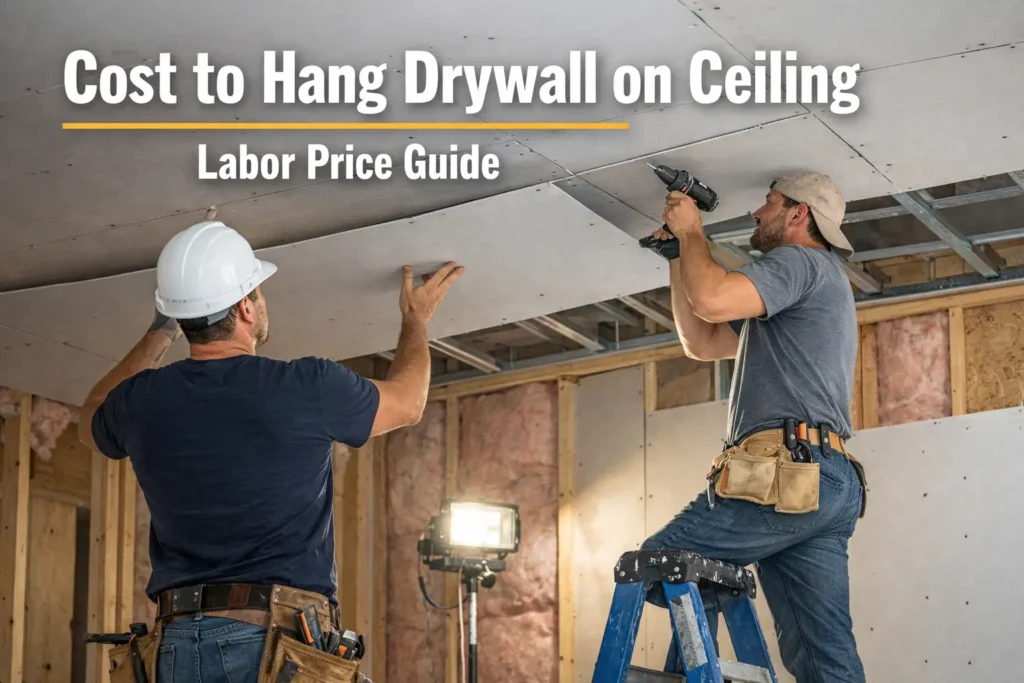
If you want to stick to your budget when hanging drywall on a ceiling, you need to know how much the project will cost. Drywall in the ceiling would typically be more expensive to install than in a wall, since it is more difficult and complex to operate in the ceiling. Lifts and scaffolding are more physically taxing and time-consuming than dry wall sheets.
Fusion Estimating will explain the main aspects that affect ceiling drywall labor prices in this post. Per-square-foot pricing, labor vs. material prices, and how ceiling height, finish level, and room form affect the price will be discussed.
We will also advise you on the budgeting and go through some of the most frequently asked questions so that you can make a smart decision with regards to your next project. This guide will make sure you are well-prepared and avoid any unexpected costs, whether you like to do things yourself or hire professionals.
How Drywall Ceiling Costs Are Calculated
As you plan your ceiling drywall job, it is important to know how much the materials and labor will cost. Here is a list of the main parts that make up the total cost. Some of the Cost Components are:
- Material Costs:The costs of the materials used to put drywall usually include drywall sheets, screws, tape, and joint compound. Most of the time, these things cost between $0.50 and $0.90 per square foot. There could be different prices of different types of drywalls, including those that are water, fire, etc. resistant.
- Labor Costs: Between 65% and 75% of the total cost of installing a drywall ceiling goes to labor. This is because overhead work is harder than drywalling.
It takes a lot of work to hang drywall on a ceiling because it is not as easy to hang it on a wall. The top work needs more skill and accuracy, which slows the process down a lot.
To have a clean and professional finish, the installation process, starting with the hanging of the drywall, and all the way to taping, mudding and finishing, requires time and expertise. These factors can change the cost of labor depending on the type of ceiling, the level of finish, and the size of the job.
Typical Ceiling Drywall Installation Labor Costs (Numbers You Need)
Understanding labor prices is crucial when calculating ceiling drywall installation cost and overall expenses. The price can change based on the area, the size of the project, and how complicated the ceiling is. Here are some normal price ranges for the work that goes into hanging drywall on a ceiling and finishing it.
Per Square Foot Labor Pricing
- It costs about $1.40 to $3.10 per square foot, which reflects the price to hang and finish drywall, for most basic jobs.
- But prices can go up to $1.50 to $3.50 or more per square foot for bigger or more complicated jobs. This depends on things like the room’s size and layout, as well as the installer’s experience.
These ranges indicate the range of expenses that labor is likely to have (not counting materials). The prices may vary based on local prices and based on the job specification.
Hourly Labor Rates
- Depending on where they work and how skilled they are, drywall workers usually charge between $40 and $100 an hour.
- Hourly labor rates depend on the size of the crew, the size of the project, and the area. Bigger crews or experts with more knowledge will probably charge more, but they might get the job done faster.
Professional vs Specialist Prices
- Highly skilled finishers, like high-end taper, may charge the most because their work is cleaner and of higher quality. This is because finishing takes more skill and time for things like polishing, mudding, and making smooth finishes.
- Hanging without finishing is often cheaper; it costs about $0.50 to $1.90 per square foot before any taping or mudding is done. Also, if the work does not need a high level of finish, the price might be cheaper.
Ceiling vs Walls — Why Ceilings Cost More
Harder Work (Overhead)
- Ceiling installation is physically intensive compared to drywall installation.
- Lifting and putting heavy drywall sheets overhead involves more work, precision, and time.
- Support and bracing or drywall lifts will add time to the preparation, especially on massive ceilings.
Accessibility and Height
- The standard ceiling height is 8 feet, however higher ceilings result in higher labor costs.
- Ceilings beyond 8 feet may necessitate scaffolding or lifts, leading to a higher cost to hang drywall on ceiling due to the intricacy of working from elevated locations.
- Installation in narrow rooms or angled ceilings is more difficult, slow, and costly.
Finishing Quality Required
- Finishing drywall (taping, mudding, and sanding) is time-consuming.
- Mid-level (Level 3) and high-end (Level 4–5) finishes require additional processes, such as joint compound and sanding, for a smooth surface.
- Higher-quality finishes need more work hours, increasing ceiling drywall installation costs.
Example Cost Scenarios (Realistic Price Estimates)
Breaking down drywall ceiling installation prices helps explain the cost to hang drywall on ceiling by room type and size. Here are some realistic cost estimates using common ceiling sizes and labor costs.
Small Room Ceiling (e.g., 12′ x 12′)
- Average installation cost: $2-$4 per sq. ft.
The cost varies according to location, finish quality, and ceiling height.
- Labor costs for hanging and finishing, or the cost to hang and finish drywall, range from $1.40-$3.10 per square foot.
Basic finish labor may be cheaper, whereas higher-end finishes may cost more.
- Labor costs for a 12′ by 12′ ceiling (144 sq. ft.) range from $200 to $450, with typical finishes.
For this size, labor often accounts for the majority of costs.
Living Room / Large Space (e.g., 300 sq. ft.)
- Mid-size ceiling cost: $650-1,300, with labor costing $500-$900.
Larger rooms demand additional installation and finishing time, increasing the cost to hang drywall on ceiling. Cost varies based on ceiling intricacy and finish level.
Whole House Ceiling (1,000–2,000 sq. ft.)
- Whole house ceiling installation costs $3,000-$8,000+.
Larger residences or many rooms raise material and labor costs.
Labor is often the main cost factor, especially for high ceilings or intricate finishing.
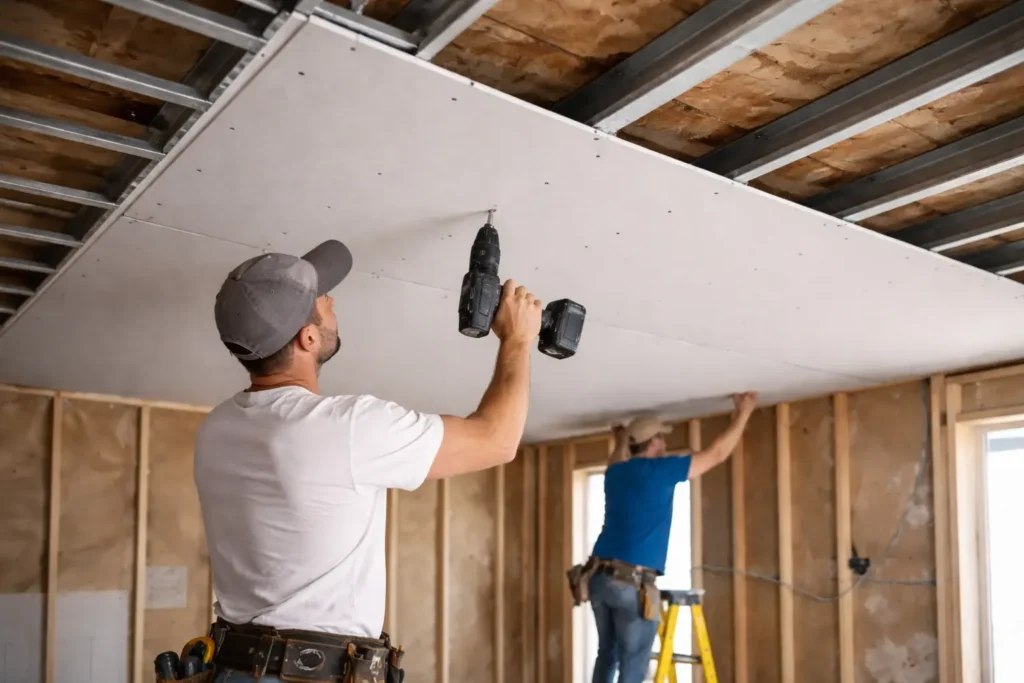
What Influences Labor Costs Most? (Details Homeowners Miss)
Labor expenses for ceiling drywall installation and the cost to hang drywall on ceiling depend on numerous factors. These may not be evident but can delay and complicate the project. Here are the main factors:
Ceiling Height
- The overhead installation of ceilings higher than 8 feet will need more equipment, lifts or scaffolding, which makes the process more time consuming and more expensive.
- Tall ceilings (9+ feet) commonly demand extra labor for setup, safety, and modifications.
- Installation time increases with higher height due to safety procedures and specific tools.
Ceiling Shape & Obstacles
- Vaulted ceilings, beams, and impediments like lighting or HVAC vents demand precise cuts and modifications.
- These design characteristics increase installation complexity and times, leading to higher labor expenses.
- Installing drywall around obstacles may impact project length due to custom-fitting of each piece.
Finish Level (0–5 Scale)
- The amount of finish on the drywall affects how much work needs to be done.
Level 0: Drywall installation without finishing.
Level 5: High-end paint projects require extra mudding, sanding, and many applications of joint compound for a flawless surface.
- Higher finish levels require more time and work especially on quality finish work, to achieve smooth and professional results.
Old Drywall Removal
- Old ceiling drywall removal increases the cost to hang drywall on ceiling with labor and disposal charges of $0.50-$2.50 per sq. ft.
- Removing old drywall may require specialized tools and more time, depending on disposal methods.
- If ceilings have numerous levels or tricky access, removal process may take longer.
Access & Prep Work
- Preparing the ceiling for electrical, plumbing, or structural work before hanging drywall increases labor time and costs.
- Installing wiring or other installations is necessary before securing drywall, which may need expert labor.
- The ceiling structure and fixtures complicate the project timeline.
Labor Costs by Location & Market Conditions
Regional Differences
- Labor charges for drywall ceiling installation vary by location. The major cities have greater labor rates because the cost of living is higher and there is a demand of qualified tradesmen.
- On the other side, rural locations with lower living costs have cheaper labor costs.
- National averages are approximate price estimates whereas local rates can be different depending on market conditions, availability of skilled labor and demand of drywall services.
Labor Shortage & Inflation Impact
- Skilled labor shortages persist in many areas, particularly after the epidemic. This has raised rates in several locations year-over-year. A shortage of drywall installers and increased residential construction demand have raised material and labor costs everywhere.
- Inflation has raised prices, notably in building and home improvement, affecting labor rates.
Contractor Pricing Styles
- Contractors may have different pricing approaches. Some drywallers charge per hour, others per square footage.
- Labor pricing should always be clarified before receiving a quote. A square-foot pricing can be predicted more than hourly pricing which can be different depending on the complexity of the project.
Labor vs Total Cost — What Percentage Is Labor?
Typical Labor Share
Labor contributes 65%-75% of the cost to hang drywall on ceiling and overall drywall installation costs. This is because hanging and completing drywall on ceilings requires a lot of manual labor compared to the low cost of sheets, screws, and joint compound.
Why It Dominates
- Labor-intensive procedures such as hanging drywall, taping, mudding, sanding, and completing the ceiling require professional people. These steps need a lot of time and attention, increasing labor costs.
- Drywall materials are cheaper than labor, resulting in a high labor share of the total cost.
Example
- If ceiling drywall installation costs $3.00/sq. ft.:
Material costs would be $1.00-$1.20.
Labor costs for those asking how much to sheetrock ceiling range from $1.80 to $2.40.
Labor is the primary cost factor in drywall ceiling installation.
How to Get Accurate Labor Quotes (Step by Step)
It is important to get a precise labor estimate for your drywall ceiling job to accurately calculate the cost to hang drywall on ceiling and avoid extra costs. When you ask professionals for quotes, these are the most important steps to take:
Measure Square Footage Accurately
- To find the overall square footage, you should always measure the length and width of the ceiling area.
- Do not forget to add extra drywall for waste, cuts, and edges that might need it. This makes sure that your contractor gets all the items he or she needs.
Ask for a Line Item Breakdown
Ask for an in-depth breakdown of the quote, with different prices for:
- Installing the drywall
- Covering with tape, mud, and sanding
- Finishing (such as making it smooth or rough)
- Texturing (if you want)
This breakdown helps keep things clear and lets you know where your money is going.
Clarify Finish Level
- Choose whether you want a smooth finish (Level 4 or 5) or a rough finish (like knockdown or popcorn) for a high-end paint job.
- Higher levels of finish will cost more in work, so be clear about what you want.
Compare Multiple Quotes
- Always get at least three quotes from different companies so you can see how much the work costs.
- Rates can be very different depending on where you live, how much experience the contractor has, and how complicated the job is. Comparing prices helps you get a fair price.
Ask About Minimum Charges
- Some companies may have minimum fees for jobs, especially ones that are not very big and popular.
- Make sure you ask about these fees up front so you do not get surprised by extra costs for small jobs.
DIY vs Professional Labor Considerations
When it comes to putting drywall on your ceiling, whether you do it yourself or hire a pro relies on your budget, skill level, and available time.
DIY Labor Savings
- Do-it-yourself work is free, but you will need the right tools, skills, and helpers.
- You can save a lot of money by installing the drywall yourself if you know what you are doing and have the right tools. However, renting drywall lifts, taping tools, and sanding equipment can cost $50 to $150/day.
- Remember that installing something yourself will take longer, and if you have never done it before, you will need time to get good at it.
Professional Benefits
- It is faster and safer to hire experts to do the job. Experts have the right tools, knowledge, and skills to get things done quickly without lowering the quality.
- The quality of the finish is also important. Professionals can get a high-end smooth finish (Level 4–5), but do-it-yourselfers need to spend a lot of time on it.
- If done improperly, overhead drywall work can be physically demanding and dangerous. To lower the risk, professionals use the right safety gear and tools, like lifts and scaffolds.
When DIY Makes Sense
Do-it-yourself projects might be a good choice if you are short on cash and your ceilings are low, like in a bathroom or closet.
It is also a good choice in case you are familiar with the simple drywall work and have previously engaged in it. Bigger, more complex projects are more often than not better left to be done by a professional to ensure an improved outcome.
Conclusion — Smart Budgeting for Ceiling Drywall
Depending on things like finish quality, ceiling complexity, and local prices, the cost to hang drywall on ceiling in labor can range from $1.40 to $3.50 per square foot. In order to create a good budget, you must obtain detailed quotes of contractors and understand what kind of finish you want (smooth or rough, such as textured). Labor rates vary widely by region, so plan for them.
Fusion Estimating is the place where you get accurate Cost Estimating Services to make the correct choice and keep within the budget. We would be happy to assist you with the most optimal prices to install drywall and other building requirements. Get in touch with us immediately so as to see how we can make your project a success.