
Wallpaper is becoming more and more popular in modern interior design because it lets people add texture, color, and personality to any room without taking the time to paint it. If you are redesigning your bedroom, upgrading your living room, or putting in a dramatic accent wall then you can control your budget and avoid unexpected costs by estimating the wallpaper installation cost.
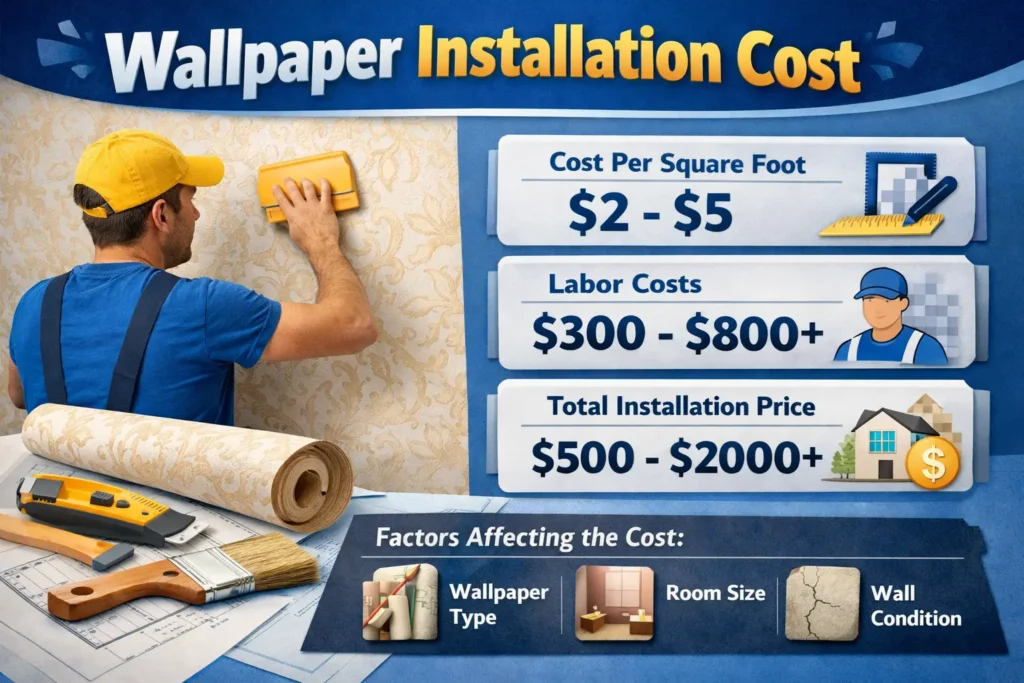
The wallpaper installation cost includes the wallpaper, labor, and any necessary prep work such as wall repairs or old paper removal. In the U.S., the average wallpaper installation cost for professional installation for a standard room is between $325 and $825. However, prices can go up or down based on things like the size of the room, the type of wallpaper, and the condition of the walls.
Being aware of these factors will also enable you to establish feasible objectives and receive correct estimates of the prices of materials set by the professionals and create the stylish space you desire, without exceeding your budget.
Average Wallpaper Installation Cost in 2026
It is important to know both national standards and how things like room size and materials affect the final wallpaper installation cost when making a budget for wallpaper installation.
Typical Cost Range
In the U.S., the average wallpaper install cost per sq ft for professional wallpaper installation for a standard wall surface is between $4 and $10 per square foot. This price includes both the work and the materials. When put in by a professional, that generally adds up to $400 to $1,000 for a normal room.
According to cost marketplaces, the cost to wallpaper a room can cost anywhere from $428 to $490 for many household projects, with lower-end services costing $262–$291 and higher-end installs costing $720 to $800 or more depending on room size and complexity.
Room by Room Cost Considerations
The total cost is mostly based on how much wall space you need to cover. Bigger rooms with more building details and wall space cost more than small bedrooms or accent walls. Costs are lower for smaller rooms like bathrooms and bedrooms. They cost more for bigger rooms like living rooms or rooms that need pattern matching or prep work.
Installation vs. Painting — A Quick Comparison
Installing wallpaper usually has a higher wallpaper installation cost up front than painting because a clean, long-lasting finish needs more skill and accuracy. Interior painting costs $1–$3 per square foot for skilled labor and materials, while wallpaper installation costs $4–$10 per square foot. Wallpaper, on the other hand, can last 10–15 years or more, often longer than paint and being more valuable over time.
Breakdown: What Drives Wallpaper Installation Costs
When you are making a budget for wallpaper installation cost, the total cost is not just a single number. It is a sum of several things that affect how much you will pay. Here is a list of the main cost factors that affect the final price.
Room Size & Wall Area
One of the main things that determines price is how much wall space you are filling. The total cost goes up because bigger rooms with more square footage need more materials and more work hours.
- Bathrooms and home offices are examples of small rooms that usually cost less because they need fewer rolls and less time to set up.
- Standard living rooms or bedrooms have more wall space, which makes the price go up.
- The total cost goes up because rooms with high ceilings need more wallpaper and take longer to install.
Installing wallpaper by a professional usually results in a wallpaper installation cost between $4 and $10 per square foot, which includes both the materials and the work. The price is based on the size of the wall.
Wallpaper Material & Type
The base cost and ease of installation of different kinds of wallpaper are very different, which directly affects the total wallpaper installation cost of your project:
- Regular paper and vinyl wallpaper are popular choices that will not out your budget.
- People often use peel-and-stick wallpapers for short-term projects because they are easy to install.
- It takes more time and skill to hang unique or textured wallpapers like embossed, fabric-backed, or grasscloth.
- Designer murals are the most expensive to buy and install, sometimes costing more per square foot than ordinary materials.
Installers can demand greater prices on more upscale, specialty walls requiring more attention so the patterns can be matched and straight.
Labor Costs
A big chunk of the wallpaper installation cost is generally labor, and professionals charge for their work in a few different ways:
- By the square foot: Most installers charge between $3 and $7 per square foot, though bigger jobs may cost more.
- By the roll: Some workers give estimates for their work based on how many rolls of wallpaper they need to hang.
- Hourly rates: In some places, professionals charge by the hour, e.g., $30 to $80 an hour for thorough or custom work.
The work includes measuring, cutting, sticking the paper up, trimming, and cleaning up. It will take longer and cost more to do projects that have a lot of corners, barriers, high ceilings, or complicated patterns.
Wall Preparation (Prep Work)
If you want a smooth, long-lasting finish on your walls before you install new wallpaper, here are some things that you should do:
- Removing old wallpaper: Removal of old wallpaper takes more time and costs more, usually per square foot.
- Fixing the surface: Before you install wallpaper, you need to fix any holes, lumps, cracks, or uneven plaster.
- Priming or under-lining: A primer or special layer makes the wallpaper stick better and look better in the end. This is especially important for textured wallpapers.
If you need to fix a lot of things, these steps can add hundreds of dollars to the wallpaper installation cost of the job.
Typical Cost Examples (Real Scenarios)
To comprehend the amount of money one would spend on wallpaper in real life, one may refer to the examples of the real costs on the current data of the U.S. These figures comprise the price of professional labor and the price of materials. They vary according to the room size, the wallpaper, and its difficulty in installation.
Small Bedroom Wallpaper Installation
One of the cheaper places to put wallpaper is a small bedroom with about 100 to 150 square feet of wall space. With average wallpaper and skilled installation:
- Total Cost: $450 to $1,200
- That is all for wallpaper rolls and normal installation by a pro.
- This size of room usually only needs a few rolls and takes less time to set up than bigger rooms.
Walls that are not complex and do not require much preparation or complicated pattern matching are easy to maintain costs at a minimum. Small rooms are a great example of this.
Standard Room (e.g., 12′ × 14′ Bedroom or Living Room)
Medium-sized rooms, such as 12′ x 14′ bedrooms or average living areas, typically have more wall space and more material consumption.
- Price range: about $1,300 to $4,800
- This price range covers both the wallpaper and the work needed to put it up on all four walls of the room.
- Bigger rooms need more wallpaper rolls and take a little longer to put up, especially if the design repeats.
Getting more than one estimate can help you narrow this number down to the exact size of your room and the wallpaper you want.
High End Room or Premium Wallpaper Project
Expensive or specialty wallpapers such as grasscloth, custom printed murals or designer textured papers are more expensive to purchase and install. This is true for both the materials and the labor:
- Premium installation cost: Approx. $2,000 to $7,000+
- Designer wallpaper rolls usually cost more, and the people who put it up charge more for matching patterns perfectly and giving the job a nice finish.
- Large living rooms, dining rooms, or rooms with historical features (like coffered ceilings or built-in shelves) also make the job take longer and cost more.
DIY vs. Professional Installation
If you want to install wallpaper yourself or hire a professional, the choice can have a big impact on the end cost, timeline, and quality of the job. Here is a clear comparison based on up-to-date cost information and real-world pros and cons.
DIY Wallpaper Installation
Cost Considerations
- The main costs of doing things yourself are the materials and basic tools. For wallpaper and supplies, the costs can range from $1 to $3 per square foot.
- You do not have to hire professional help, which is usually what contractors charge the most for.
Pros
- For starters, it costs less because you do not have to pay someone to do the work.
- Flexible timing because you choose your own plan and speed.
- Happy feelings because a lot of people enjoy being successful at do-it-yourself projects.
Cons
- Measuring correctly, matching patterns, and using the right tool can be hard and take a lot of time which requires skills.
- Costs go up when you have to buy or rent materials like paste, shaping tools, and cutting tools.
- Mistaken prints (like bubbles, misalignment, or waste) might need extra rolls or professional fixing.
Professional Wallpaper Installation
Cost Considerations
- Professional installation usually costs more because it includes work. For a standard room, the average project running a professional installation usually costs between $325 and $825.
Pros
- As a professional, you know how to deal with tricky walls, pattern copies, and alignment.
- Professional fitters finish jobs faster than most people who do them themselves.
- If you get a professional finish, it usually lasts longer and has fewer flaws.
Cons
- When you hire a professional, the cost of the job goes up because of the labor.
- You need to make sure that the technician is available at the right time.
When to Choose Which
The size of your job should help you decide between do-it-yourself installation and hiring a professional. Do it yourself, wallpapering is best for small rooms or accent walls, especially if you have used pre-pasted or peel-and-stick wallpaper before or know how to do it. Professional installation, on the other hand, is best for bigger areas, high-end materials, or patterns with lots of small details. This way, you can be sure of a perfect finish with no chance of mistakes.
How to Get Accurate Wallpaper Installation Quotes
Getting an exact quote for installing wallpaper helps you stick to your budget and avoid costs you did not expect. Focus on getting the right information, asking the right questions, and reviewing several quotes to make sure each one fits your project’s needs.
Provide Accurate Measurements
Measure your space carefully before you ask for quotes:
- Height and width of each wall: To find the overall square footage, multiply the height by the width of each wall.
- Subtract large openings: To avoid overestimating, take away the area of windows and doors.
- Account for pattern repeats: If the wallpaper has a pattern that repeats, add extra material (usually 10–15%) so the installer can properly match the designs.
With the correct measurements, installers are in a position to determine the quantities of material they will use, as well as the time that is required to work on the job.
Questions to Ask Installers
When you talk to a professional, make sure you understand what their quote covers by asking these important questions:
- What does the price cover? (for example, prime the walls, remove old wallpaper, and clean up)
- Does the price include the work of matching the pattern and trimming?
- What number of rolls of wallpaper do we need?
- Do you buy the wallpaper, or do I need to do it myself?
- Is the price fixed or can it change if the walls need more work?
If you ask these questions up front, there will not be any surprises later.
Why Get Multiple Estimates
Get at least two to three quotes from different technicians before making a choice. Several estimates:
- Give you a range of how much it will likely cost instead of a single number.
- Help you spot prices that are too high or too low.
- Let you see how different contractors prepare the walls, do the work, and use the materials.
When you compare installers, you can find one whose price, skill, and ability to communicate are just right for you.
Smart Ways to Save Money on Wallpaper
Wallpaper can make a room look beautiful, but the materials and fitting fees can add up quickly. Here are realistic and modern ways to cut costs without compromising style or impact.
Use Wallpaper Strategically
- Do not cover every wall in a room; instead, focus on one accent wall or apply front room wallpaper ideas strategically. This will save a lot of time and money on materials while still making a style statement.
- Do not put wallpaper everywhere. Try putting it behind your bed, on the TV wall, or in the doorway to save space and money.
Choose Budget Friendly Materials
- Instead of premium, custom, or heavily textured wallpapers, choose standard or simple designed wallpapers. These tend to cost less per square foot and are easier (cheaper) to install.
- Peel-and-stick options can save you money for small areas or short-term design changes because you do not have to use paste and there is less mess.
Shop Smart
- To save money on materials, look for sales, discounts, and clearance items on wallpaper rolls. Searching multiple stores can save you money because there are chances of getting lower prices.
- Only buy what you need by accurately measuring the walls and taking into account design repeats. This prevents you from wasting money and buying too much.
Mix with Paint or Other Elements
Put wallpaper and installation where it matters most and paint where it does not for a stylish look that uses fewer rolls of wallpaper.
Common Mistakes That Inflate Wallpaper Costs
A few missteps when planning a wallpaper project can significantly increase costs by increasing material waste or work time. If you know about these common mistakes, you can stay on budget and get a better end result.
Skipping Wall Preparation
If you do not properly prepare the walls by cleaning, filling cracks, smoothing out rough spots, or prepping, the paint may not stick well and may bubble or peel later. That usually means you have to do it again or have a professional fix it, which adds to the cost.
Miscalculating Material Needs
Failure to measure your walls properly or failure to consider the windows, doors and other features of the building may cause you to order an insufficient amount of wallpaper. This not only delays things, but it may also mean getting more rolls, which cost more, if the same batch is not available later.
Ignoring Pattern Repeats and Alignment
Matching repeating pattern wallpaper requires extra material. If you measure without considering pattern repeats, you may have more waste and misaligned seams, and installers may need more time and material to rectify problems.
Using Wrong Adhesive or Tools
Different wallpapers need different tools or glue to stick to them. To avoid peeling or bubbling, use the wrong paste. This may require fixes or reinstallations. The right materials are important for both longevity and keeping costs down.
Conclusion + Quick Cost Recap
The cost of wallpaper installation depends on room size, kind, and procedure, but current U.S. data can help you budget. When you hire someone to complete the job, it would normally cost you between 400 and 1000 or even more to complete the entire room. This includes the materials and labor, which add up to about $4 to $10 per square foot. Premium wallpapers, complicated patterns, and significant wall prep can raise prices.
Most of the time, costs stay low for smaller rooms or accent walls. On the other hand, costs go up for big rooms or custom designs. In order to make the best estimate for your job, you need to carefully measure the space, obtain quotes from two or three professionals and add additional costs such as preparing the walls and matching the patterns. By following these directions and consulting Residential Estimating Services, you will be better prepared to make a good budget and stay out of trouble.