
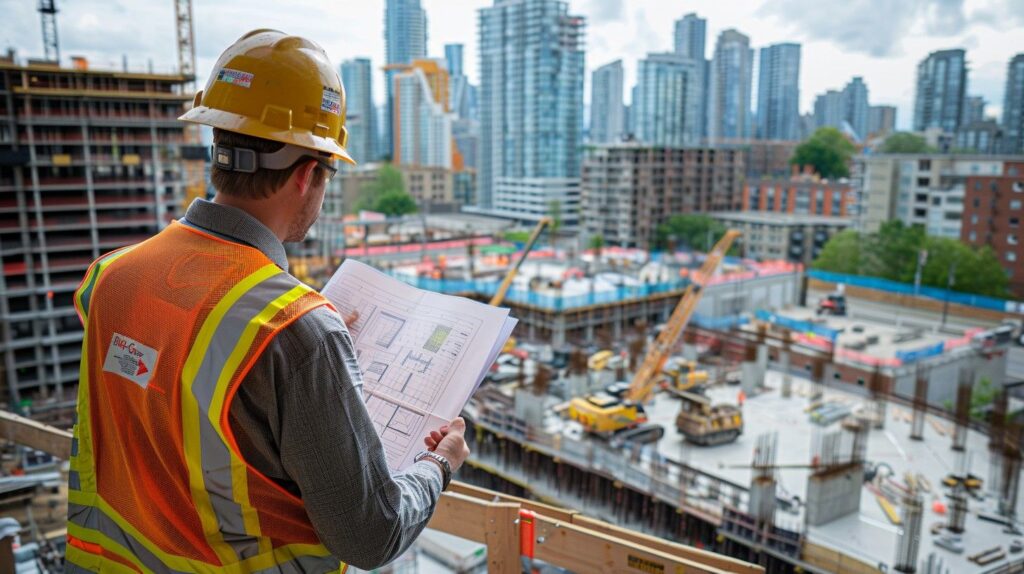
As of late 2025 and early 2026, the U.S. construction industry is a major economic force, with annualized construction spending at $2.17 trillion, dropping somewhat from the year before but still significant. Despite its scale, the industry has suffered declining spending in residential and nonresidential areas, workforce shortages, and rising material input costs.
Industry cost indices reveal construction costs increasing 6–7% year-over-year in many areas due to tariffs and supply-chain uncertainty. Due to manpower shortages, engineering and construction wages have risen 4.2%.
In this context, precision budgeting is necessary to stay competitive and protect project margins. Construction cost planning relies on OHP (Overhead and Profit). Calculating OHP in construction correctly includes indirect company costs and reasonable profit margins, increasing bid competitiveness and contractor financial health. Accurate budgeting avoids overruns and builds trust between owners and contractors.
What Is OHP in Construction Budgeting?
Overhead and Profit (OH&P) is a common word in U.S. construction contracts and estimates for budgeting. It covers indirect business charges and the contractor’s profit margin along with direct project costs.
- Overhead refers to secondary expenditures associated with running a construction enterprise, not directly related to project work. Office rent, utilities, administrative salaries, insurance, marketing, estimating software, and equipment depreciation are examples. Even without a project, overhead expenditures keep the organization running.
- Profit is the financial gain a contractor receives after covering direct and overhead charges. It encourages growth, compensates for corporate risk, and ensures long-term survival. Profit is discretionary in that competitive or strategic pricing can lower it, but continually low or nil profit weakens firm sustainability.
- Direct costs like materials, labor, and equipment are directly related to finishing a project. On the other hand, costs like rent or general business expenses help many projects at once and are not easily linked to a single contract.
Bidding adds OHP as a proportion of direct costs to cover business expenses and profit goals. This technique prevents underpricing, improves transparency, and stabilizes contractors’ finances.
Components of Overhead in Construction
To manage a firm and accomplish projects, overhead costs are indirect expenses like personnel and supplies in construction estimating. Correctly identifying and assigning overhead components improves profitability and prevents bid underpricing.
Jobsite Overhead (General Conditions)
Jobsite overhead, also termed direct overhead, are indirect construction project costs that are not direct construction costs. These cover execution-critical daily support:
Typical Jobsite Overhead items:
- On-site supervision: On-site managers, such as foremen, supervisors, and field engineers, coordinate work without direct labor.
- Temporary facilities & utilities: Provided temporary amenities such as portable offices, bathrooms, project lighting, and power.
- Equipment rental and maintenance: Rent and maintain construction equipment, including tools and machinery.
- Site safety & compliance: Responsible for site safety and compliance, including PPE, safety meetings, and inspections.
- Project management time: scheduling, documentation, and job-specific controls.
Project bids incorporate these costs since they help a task without building physical components.
Company/General Overhead
Business overhead, often known as indirect overhead, supports overall operations regardless of job.
Common Company Overhead items:
- Office rent and utilities for administrative space.
- Required insurance, bonds, and licenses for compliance.
- Administrative wages (estimators, accountants, HR).
- Marketing and company growth.
- Utilizing software and technology (estimating, accounting, BIM tools).
Each project gets a fair part of the company’s running expenses through an overhead rate, usually based on worker hours or direct costs.
Why Proper Allocation Matters
Guessing or omitting costs can lead to underpricing, eroding margins, or project losses. An organized method to identify and assign overhead components guarantees competitive and profitable bids.
What “Profit” Represents and Why It’s Not Optional
After paying direct and indirect charges, a contractor gets profit in construction budgeting. No bid is complete without profit margins. Even a technically successful project can fail financially. U.S. construction net profit margins vary from 5% to 10%, depending on sector and market conditions. This reflects competitive pricing and financial health concerns.
Profit supports various crucial corporate functions:
- Risk absorption: Construction projects face uncertainties like delays, weather, and supply disruptions. Profit gives you a buffer.
- Cash flow stability: A positive margin ensures cost coverage during payment delays or modification orders.
- Reinvestment and growth: Profits support equipment updates, training, technology, and business expansion.
- Business sustainability: Low profit affects long-term existence, despite timely work completion.
Profit is the contractor’s return, whereas overhead covers indirect operational costs (office, insurance, admin wages). Bids without profit may seem cheap, yet costs might lead to losses. Residential projects typically have better profit margins than big civil or industrial projects, but a consistent profit strategy assures competitiveness without compromising financial stability.
Why OHP Is Critical in U.S. Construction Budgeting
In the United States, construction budgeting, OHP, which stands for Overhead and Profit, makes sure that bids and budgets are based on direct costs, financial needs, and the chance of losing money. If workers do not do enough OHP accounting, they might cost too little for their work, which will hurt profit margins and cause money problems during the project.
Ensures Realistic and Competitive Bids
OHP in construction helps contractors bid competitively and pay all expected costs. When cost and profit are missing or overestimated, estimates can appear artificially cheap, resulting in bids that win contracts but return little. Accurate OHP calculation is crucial in competitive markets with severe cost demands.
Protects Financial Health and Cash Flow
Profit supports expansion and reduces financial risk, while overhead covers office operations, insurance, and administrative salaries. Accounting for both helps contractors minimize job losses by ensuring projects boost cash flow and long-term profitability.
Reduces Change-Order Disputes and Risk
Clients and stakeholders understand cost structures better when budgets include OHP. The transparency eliminates arguments over modification orders and unexpected construction costs and builds confidence between owners and contractors.
Supports Fair Competition and Market Stability
Proper OHP prevents a “race to the bottom” where contractors lower pricing un-sustainablely. It rewards enterprises that price work fairly and responsibly, improving competitiveness.
How OHP Impacts Project Owners vs Contractors
OHP (Overhead and Profit) affects both sides of a construction project differently since it influences cost calculation and risk and value sharing between owners and contractors. This makes clear budgeting vital for success.
- Proper OHP accounting provides openness and clarity for project owners in bids. When costs and profit are clearly stated as separate items, owners can better understand what they are paying for and compare offers. Transparency helps contractors trust you and keeps prices honest. Owners can negotiate and budget more securely knowing that indirect costs and profit margins are not concealed or bundled into unknown totals.
- OHP is important for contractors’ company survival. Profit rewards project risk and task delivery, whereas overhead covers indirect running costs including office administration, insurance, estimating software, and staff assistance. Without OHP in construction, contractors may underprice bids to gain work, but actual costs may exceed their budget, causing margin erosion or cash-flow concerns. Pricing OHP correctly promotes sustainable profit margins and long-term business health, allowing contractors to finish projects without financial pressure.
Common Mistakes Made When Calculating OHP
Construction companies need to figure out Overhead and Profit (OHP) correctly to cover all their costs and make money. But a lot of contractors make mistakes that could be avoided, which leads to underpriced bids, margin loss, and budget mismatches. Understanding these typical faults improves estimating and prevents financial mishaps.
Using Flat Percentages Without Actual Cost Data
Using generic or flat overhead percentages instead of firm financials can lead to erroneous pricing. Real expenditure data provides more accurate and sustainable OHP because overhead fluctuates by firm size, project kind, and market conditions.
Misclassifying Expenses
Confusing overhead with general & administrative or fringe cost pools causes estimation inaccuracies and biases. Classifying expenses properly accounts for them.
Not Regularly Reviewing Overhead Costs
Rent increases and staff changes affect overhead costs. Underestimating costs and lowering profitability might result from infrequent overhead rate updates.
Ignoring Variable vs. Fixed Costs
Taxes, repairs, and admin support are overlooked if all costs are static. Differentiating fixed and variable costs clarifies overhead trends.
Applying the Same OHP Rate to All Projects
Each project has distinct needs. Applying the same OHP % to all projects can overprice some and underprice others. Adjusting overhead to project details improves accuracy.
Contractors can develop more competitive and profitable estimates by avoiding these pitfalls and adopting structured OHP allocation methodologies using real cost data. Professional estimators help here. Fusion Estimating calculates OHP in construction accurately using current cost data, structured cost allocation, and market-based pricing to enable contractors bid competitively without losing profit.
Best Practices for Applying OHP in Construction Budgets
Correct OHP application is crucial for accurate construction budgeting and sustainable margins. To ensure every project covers its indirect expenses and maintains a reasonable profit level that reflects risk and market conditions.
Identify overhead categories clearly
Divide overhead into worksite (project management, temporary facilities, safety, supervision) and company (insurance, office operations, accounting, software, staffing). Clear categories avoid omissions and double counting.
Allocate overhead proportionally
Labor hours, direct costs, and project value should determine overhead distribution. Proportional allocation protects large, complex projects from the same overhead as small ones.
Separate overhead and profit
Overhead covers operating costs and profit compensates contractors for risk and performance. Separating them in estimates promotes internal clarity and client trust.
Use historical job-costing data
Companies can adjust costs by comparing expected and actual overhead. Regular cost reviews show insurance, labor, transportation, technology, and subcontractor support cost trends, enhancing bid accuracy.
Adjust for project risk level
Accelerated schedules, design unpredictability, restricted access, and variable material exposure increase financial risk. Profit should reflect risk rather than be constant across projects.
Be transparent in proposals
Clear presentation of direct cost + overhead + profit minimizes change order disputes and defends pricing to owners, financiers, and construction managers.
Simple application framework
Estimate direct costs, allocate overhead, apply profit percentage, and compare to historical results.
Professional estimation can boost accuracy. Fusion Estimating applies OHP appropriately using structured cost models and current market data to assist contractors produce competitive bids while safeguarding profitability.

Role of Professional Estimating Services in OHP Accuracy
The U.S. construction market is competitive, so regional labor costs, changing material prices, and overhead costs make it harder than ever to get an accurate budget. Professional estimating services give correct, data-driven cost estimates for direct costs, overhead, and profit. This lowers the amount of guessing and raises the accuracy of bids.
- Outsourcing estimation improves cost accuracy. Advanced technologies, historical cost data, and real-time price databases help professional estimators account for labor, materials, equipment, and indirect costs better than manual or ad-hoc techniques. This prevents underpricing and protects business margins.
- Advantages include efficiency and time savings. Making precise estimates in-house can take time and distract teams from project execution and client interactions. Outsourcing lets organizations accept more bids without hiring or training additional workers.
- Professional estimation promotes transparency and risk management. Good estimates eliminate budget overruns, reduce change order disputes, and strengthen proposals with owners and lenders.
Partnership with a dedicated team boosts competitiveness and financial health for many organizations, especially small to mid-sized contractors. Fusion Estimating helps contractors, subcontractors, and developers across the U.S. produce clear, precise estimates that segregate direct costs, overhead, and profit for stronger bids and higher win rates.
Ready to Improve Your Estimates? Contact Fusion Estimating!
Construction budgeting relies on Overhead and Profit (OHP) to price projects properly and keep organizations financially healthy. OHP in construction accuracy improves budgets, protects profit margins, and reduces conflicts and cost overruns. OHP authenticity enhances client trust, transparency, and smarter bidding decisions in today’s competitive U.S. market.
Accurate OHP requires disciplined estimating and updated cost data. Fusion Estimating provides detailed, competitive, profit-focused estimates. For accurate and defendable bids, we segregate direct costs, overhead, and profit in transparent budgets. Contact Fusion Estimating immediately for project consultation or estimate review.