
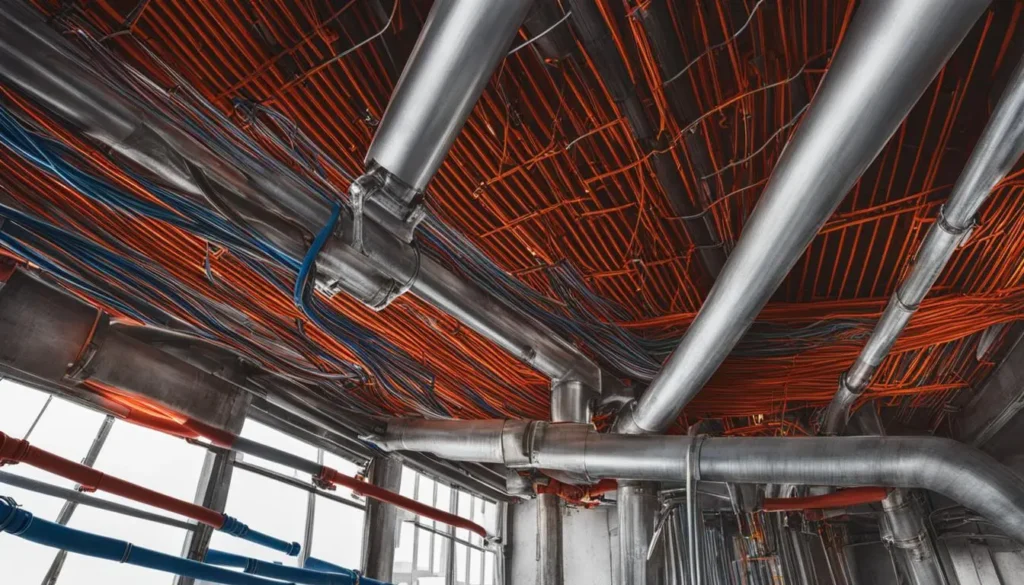
An important part of modern wiring systems is electrical conduit, which acts as a raceway to protect electrical conductors from damage, moisture, and possible fire risks, making it one of the most common types of electrical conduit used today. There are many types of conduit, like metal and plastic. Its job is to keep wires safe in both homes and businesses. It simplifies the process of making electrical cables run in a manner that is safe, easy to maintain and compliant to the local regulations.
Picking the right conduit is important for safety, following the rules, and making sure the electrical system works well in the long run when selecting among the types of electrical conduit. Whether it is inside, outside, or underground, different places need different kinds of conduit. The right conduit also protects wires against risks such as being struck down, subjected to corrosive materials or high heat which conserves money in cases of repair and makes it safer.
Fusion Estimating will talk about the different types of electrical conduit, why you might want to choose one type over another, and how to make the best choice for your wiring needs.
What Is Electrical Conduit & Why It’s Used
In order to house and protect electrical wires, people use conduit, which is a protective tube or pipe commonly referred to as conduit pipes. It is a raceway that makes it safe for electrical wiring to run through buildings, underground, or inside other structures.
Materials used to make conduit can include metal, plastic, or a mix of metal and plastic. The choice of material depends on the purpose and the environment. Conduit’s main job is to keep electrical cables safe, prevent damage, and make it easy to do maintenance and future upgrades.
Key Safety Purposes
- Protection from Physical Damage: Wires are not affected by the external forces that can destroy conduit such as nails, abrasion, contact and vibration.
- Moisture & Environmental Protection: Conduit keeps wires dry in wet or underground places, where moisture could otherwise cause short circuits or corrosion. It needs installations that will be either external or under severe conditions.
- Fire and Shock Protection: When wires are not allowed to become too hot, and sparks do not occur, conduit prevents the possibility of the occurrence of electrical fires. In addition, it protects against touching electrical conductors by mistake. In business installations, the National Electrical Code (NEC) usually demands conduit.
Organization & Future Maintenance
Using conduit not only makes wiring systems safer, but it also makes upkeep easier in the future. Conduit makes it easier to replace, fix, or upgrade wiring without damaging expensive buildings or cause damage to the ones around them.
How Electrical Codes Influence Conduit Selection
The National Electrical Code (NEC) carries much weight as far as the selection of conduit to use in an electric wiring system is concerned. This code tells you the basic safety rules and what kind of conduit to use based on where you live, why you are installing it, and other factors. Electrical systems must be safe, work well, and meet industry standards. Code-Driven Conduit in Action Choosing:
- Underground Wiring: The NEC states that conduit must be used to protect underground wiring from damage due to water and force. People often use PVC conduit for this type of setup because it won’t rust and will last a long time when it’s wet.
- Commercial & Industrial Installations: The use of metal conduits e.g. RMC or IMC conduit in commercial buildings or industrial buildings is common because they have a higher mechanical protection in high risk areas where wires are more prone to get damaged.
In addition to the NEC, local rules may also affect the choice of conduit. Areas that receive excessive weather conditions (such as heat or humidity) or earthquakes can have additional regulations to ensure the safety and adherence to the regulations.
Key Differences Between Conduit Types
It is important to know the main differences between metallic and non-metallic conduits, as well as between rigid and flexible choices, when choosing among types of conduit for electrical installations. These differences have an effect on strength, resistance to corrosion, ease of installation, and cost total.
- Metal conduits, such as RMC, IMC, and EMT, provide better mechanical safety and work best in dangerous places. They last longer, but they may be larger and cost more.
- Non-metallic conduits, such as PVC, do not rust, are light, and are easy to install. However, they might not provide as much physical security as metal.
The right conduit for your installation will depend on the climate and the needs of the project.
Rigid Metallic Conduit Types & Uses
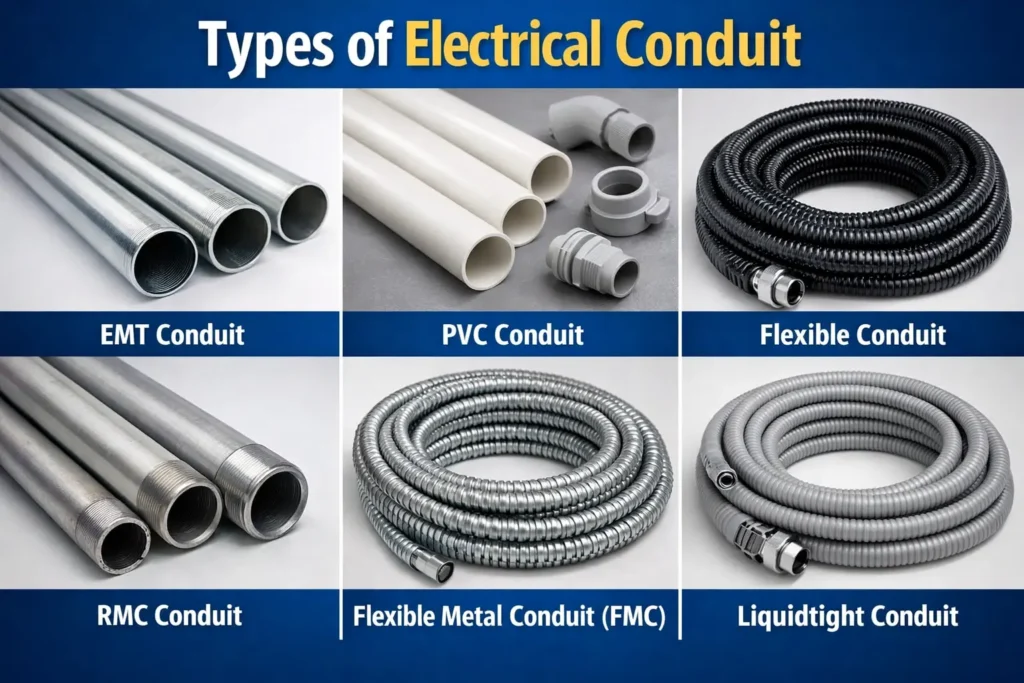
There are several important parts of electrical wire systems, each representing specific types of electrical conduit. They include rigid metallic conduit (RMC), intermediate metal conduit (IMC), electrical metallic tubing (EMT) and flexible metal conduit (FMC and LFMC). These kinds of conduit come at various cost, flexibility and security levels depending on the installation requirements.
Rigid Metal Conduit (RMC)
- Description: RMC is the strongest type of conduit because it is made of thick-walled steel or aluminum. It provides the best mechanical protection against physical damage, impacts, and environmental conditions.
- Uses: Typically used in high-impact areas, businesses, and outdoor locations where longevity is a factor.
- Pros: It is very protective against physical damage, has a long life span, and is able to withstand harsh environments, making it ideal for heavy-duty applications.
- Cons: RMC is heavy, making it difficult to install, and is more expensive than other types of conduit.
Intermediate Metal Conduit (IMC)
- Description: IMC is a lighter variant of RMC which also protects electrical lines effectively. Its walls are also not as thick as those in RMC due to the fact that it is composed of steel.
- Uses: In commercial and industrial settings, IMC is often used instead of RMC because RMC might be too expensive or heavy for the job.
- Pros: It is strong and affordable, which makes it a popular choice for middle-range uses.
- Cons: It does provide good protection, but it does not last as long as RMC in high-impact settings.
Electrical Metallic Tubing (EMT)
- Description: People usually use EMT, which is a thin-walled steel or aluminum pipe, inside as one of the commonly installed types of electrical conduit. It can be bent more easily than RMC or IMC, which makes it perfect for uses that need to be flexible.
- Uses: Usually found in residential or small-scale commercial settings where there is a little chance of damaging the conduit physically.
- Pros: It is cheap, simple to use, and found in many places. Compared to RMC and IMC, EMT is lighter and easier to set up.
- Cons: It lacks coverage than RMC and may rust if left out in the weather without an extra coating. It is not good for places with a lot of physical danger.
Flexible Metal Conduit (FMC & LFMC)
- Description: FMC is made of spiral steel, and LFMC is a type of flexible pipe that has a plastic jacket around it to keep water out. These tubes are very bendable and do not need extra conduit with fittings to go around corners.
- Uses: It is ideal where there is movement or vibration like around machinery or where rigid conduit is difficult to lay like in small areas.
- Pros: It is easy to install flexible conduit without having to deal with complicated fittings, which makes it great for tight runs and ever changing settings. LFMC extends the protection against water, making it perfect for places with a lot of humidity.
- Cons: FMC and LFMC are much more practical than RMC or IMC, and they are implemented in the situations when the flexibility outweighs protection.
Non Metallic Conduit Types & Why They’re Used
Non-metallic conduits are becoming more common in modern electrical systems because they are light, do not rust, and are easy to set up, making them popular types of electrical conduit. Different types of conduit are available to meet particular safety and environmental needs These conduits are ideal for budget-conscious installations or places where metal conduits would rust or wear out quickly.
PVC (Polyvinyl Chloride) Conduit
- Description: PVC conduit is considered to be one of the most popular non-metallic conduits. It is non-absorbent, lightweight, and cheap; therefore, it is ideal in both indoor and outdoor applications. A lot of people use it in residential as well as commercial settings.
Pros:
- Inexpensive and easy to find.
- Corrosion-resistant, so it can be used in wet places.
- It is simple to set up, especially for long runs with few parts.
Cons:
- Crack when exposed to low temperatures because they brittle in cold weather.
- For safety reasons, it needs a grounding conductor.
- It might bend in very hot weather, so you can not use it in places with extreme temperatures.
Electrical Non Metallic Tubing (ENT)
- Description: ENT is a corrugated, bendable PVC pipe that is mostly used in residences and small companies. This product is meant to be used inside, in dry conditions, and is usually put in walls, ceilings, and floors.
Pros:
- Because it is flexible, it is great for projects that need to bend and turn.
- The fact that it is light and easy to handle speeds up the mounting process.
Cons:
- Limited support spans require regular support to prevent sagging.
- Because it is so light, it is not good for high-impact use or use outside.
Fiberglass/Reinforced Thermosetting Resin Conduit (RTRC)
- Description: RTRC is a powerful, non-metallic conduit which is composed of resin and fiberglass. It is designed to work in hard locations such as chemical plants, utilities and locations where chemicals and high temperatures are prevalent.
Pros:
- It does not rust and is perfect for the oil, gas, and chemical businesses.
- It is strong and light, which makes it easy to install in tight spaces.
Cons:
- It costs more than PVC and other types of non-metallic tubing.
- Prices and strength needs make it hard to use in residential settings.
HDPE (High-Density Polyethylene) Conduit
- Description: HDPE conduit is generally utilized in telecommunication and fiber optic applications and is durable and rust free. It is easy to pull its wire because it has a smooth interior thus suitable in underground installation, where it is needed to last long.
Pros:
- Not easily corroded and able to handle tough environments.
- The smooth inside simplifies wire pulling, decreasing installation friction.
Cons:
- Usually used for phone and cable uses, which limits its use in regular electrical installations.
- Needs special tools and parts for installation.
Specialized Conduit Types & Niche Uses
Different types of conduit are available to meet particular safety and environmental needs. They are ideal conduits that are custom made to suit cases where the standard conduit may fail.
Liquid-tight Flexible Conduit (LFMC)
- Description: Its purpose is to keep electrical lines safe in places where moisture is a problem. The plastic coating on this bendable metal conduit makes it better resistant to water and other environmental factors.
- Uses: Usually found in outdoor settings, on industrial machines, or in wet places.
Low Smoke Zero Halogen (LSZH) Conduit
- Description: When LSZH lines are exposed to fire, they are made to give off little to no smoke and no halogen gases.
- Uses: It is ideal in areas that have low air circulation, such as rooms or mode of transportation, where fire safety is highly considered.
Direct Burial Conduit
- Description: This conduit is designed to be buried straight in the ground without any extra coatings to protect it.
- Uses: Commonly used for concealed utility lines or underground electrical systems, like those that run to distant locations.
How to Choose the Right Conduit
When choosing the appropriate conduit to carry out your electrical work, you need to consider a number of key factors to ensure that the system is safe, long-lasting, and cost-effective.
Factors to Consider
Environment
- Indoor vs. Outdoor vs. Underground: Different places need numerous types of pipes. If you need extra safety for an outdoor or underground installation, metal conduit like RMC or IMC is better than PVC. Moisture resistance is very important for conduits that are buried underground or in wet places.
Mechanical Protection Needed
- High Traffic vs. Light Residential: Heavy ones such as RMC or IMC are more effective in safeguarding your installation against mechanical damage in case it will be located in a plant or warehouse. Alternatively, the lighter home environments may only require EMT or PVC.
Resistance to corrosion
- Harsh Elements: Metal conduits like RMC may rust in places near the coast or where chemicals are present. PVC or fiberglass pipes are better at resisting corrosion in these kinds of places.
Installation Ease & Cost
- Budget and Labor Considerations: PVC conduits in comparison with metal conduits are normally cheap and easy to install as compared to metal conduits which need special tools to cut and bend. Rather, metal conduit which is more long term safe can be used.
Code & Safety Requirements
- Compliance: The National Electrical Code (NEC) and state laws often say what kinds of conduit can be used for certain tasks, especially in high-risk areas like factories or other dangerous places.
Decision Checklist
- Type of environment (dry, wet, or underground)
- Level of physical danger (impact, rust, temperature)
- Limited funds (cost-effective vs. long-lasting)
- Future upkeep and expandability (flexibility and ease of upgrades)
Common Mistakes & Best Practices
Common Mistakes to Avoid
- Wrong Conduit for Environment: Using non-metallic conduit (like PVC) outside or in high-risk areas where metal conduit (RMC or IMC) would be better for safety is an example of using the wrong conduit for the job.
- Improper Bending: Cutting or bending conduit too much can damage it and make the wires inside it wear out faster. Always follow the bend radius instructions from the manufacturer.
- Ignoring Grounding Requirements: Electrical dangers can happen if you do not properly ground non-metallic conduit or forget that you need a grounding conductor.
Best Practices
- Always check the local construction regulations and talk to engineers or Electrical Estimating Services professionals to make sure you choose the right conduit and install it safely.
Conclusion — Making Informed Conduit Choices
Picking the correct electrical conduit from the types of electrical conduit is important for safety, following the rules, and long-term reliability. Metallic and non-metallic conduits are each used for specific tasks, which rely on things like the environment, the need for mechanical protection, and the budget. Rigid metal conduits are best for high-risk settings, while PVC conduits are cost-effective and moisture-resistant.
Making the right choice will protect the wiring the best, make sure you follow local rules, and make maintenance easier in the future. If you choose the right conduit, you can avoid future fixes that cost a lot of money, downtime, and safety risks.