
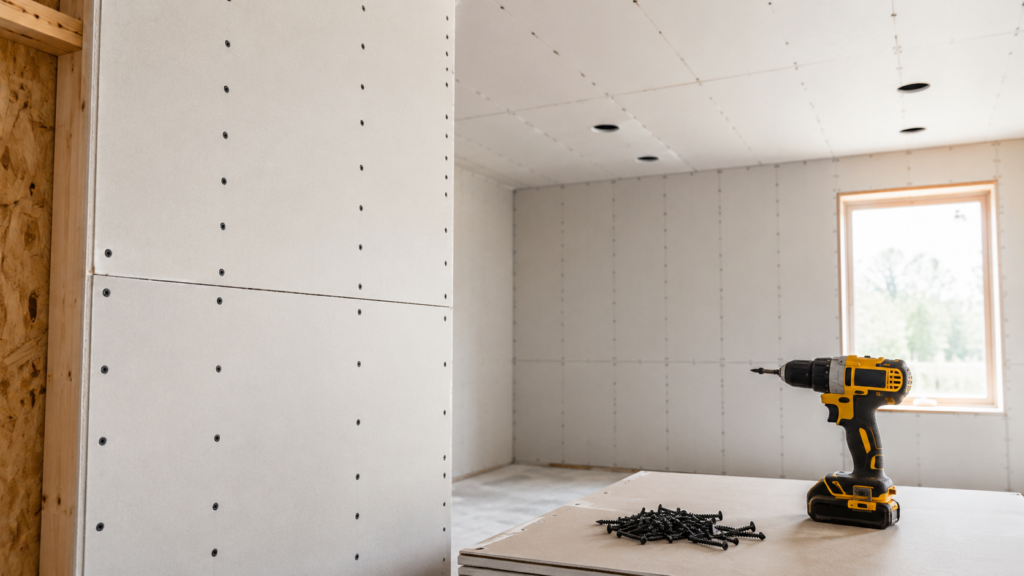
There are some details that make a big difference when installing drywall. Often asked is the number of screws in a drywall sheet. Too few screws may result in panels that don’t stay in place, exposed seams, and future repairs. Excessive use can be time-consuming and expensive.
It is dependent on whether the drywall is on a wall or a ceiling. This is also dependent on local building requirements and project specifications. Understanding the correct number of screws per sheet of drywall helps improve quality, reduce waste, and keep projects on schedule.
We will discuss the most recommended screw spacing and factors that influence drywall fixing in this guide.
Why Is Screw Spacing Important in Drywall Installation?
The sheet is attached to the framing with drywall screws. Too far apart can cause the board to shift or sag with time. This can cause cracks, nail pops and leveling.
Proper spacing helps:
- Improve panel stability
- Reduce movement
- Prevent sagging
- Create smoother finishes
- Meet building standards
There are spacing guidelines used for professional drywall installation, and they know that fixing up the drywall is just as crucial as installing it properly.
How Many Screws Per Sheet of Drywall Are Used on Walls?
The average is about 28 to 32 screws for a standard 4×8 drywall sheet on walls. The number will vary according to the project needs and stud spacing. Typically, screws are installed every 16” on the framing members for most wall applications.
For residential projects, it is common for contractors to find that about 32 screws per sheet of drywall will yield a secure attachment and not be too many. This results in a good installation and controlled labour and material costs.
How Many Screws Per Sheet of Drywall Are Used on Ceilings?
There are more fasteners needed for ceilings than walls, as the drywall drops due to gravity. When people ask how many drywall screws per sheet are required for ceiling installations, it is generally 36 to 48 screws on the standard size 4×8 drywall sheet. Extra screws provide improved short and long-term performance and reduce sagging.
Ceiling panels may be subjected to higher stresses than wall panels. As a result, contractors tend to decrease the spacing between the screws for additional support. For ceiling use, it is always best to adhere to project requirements and local code requirements when calculating screws per sheet of drywall.
How Many Screws Are Needed in a Standard 4×8 Drywall Sheet?
One question that is often asked by many clients is how many screws should be used in a 4×8 sheet of drywall.
The guideline is:
- Screws: 28-32 per sheet for walls
- The number of screws per sheet: 36-48 screws per sheet
The numbers may be different depending on the framing layout, drywall thickness and project conditions. For instance, commercial projects could have a different schedule of fastenings from the one used in homes. Some builders also abide by a manufacturer’s recommendations that are more than minimum standards. What’s most important is to keep the spacing equal throughout the installation.
What Is the Recommended Screw Spacing for Walls?
Wall installations typically follow a simple pattern.
Screws are commonly placed:
- Every 16 inches along studs
- Around panel edges
- At intermediate framing members
The objective is to install the board evenly without harming the wallpaper. Do not over-tighten screws or they may lose grip. If they are under-driven, they can cause finishing issues. The depth of the screws as well as the total number of screws per sheet of dry wall is as significant. Installers should make sure the screw head does not tear the paper and that it is flush with the paper, slightly beneath it.
What Is the Recommended Screw Spacing for Ceilings?
Ceilings require closer spacing because drywall must resist downward forces over time.
A common recommendation includes:
- Screws every 12 inches on framing members
- Additional fastening along edges
- Increased support in high-humidity areas
This allows for less sagging and joint movement. Some projects require special ceiling systems or thicker drywall may require special fastening. Check specifications prior to installation. If you work as a contractor with a lot of overhead costs involved, you need to know how many drywall screws are needed for every drywall sheet for ceiling work to make it easier to plan your project.
What Factors Affect Drywall Screw Requirements?
Several factors influence the total number of screws needed on a project.
These include:
- Wall or ceiling application
- Drywall thickness
- Framing spacing
- Building codes
- Manufacturer requirements
- Environmental conditions
For instance, the ceiling of a space with humidity might need more support than an interior space. At the same time, commercial projects may have different fastening specifications than home projects. These factors make it difficult to estimate the amount of drywall material.
Why Does Accurate Drywall Estimation Matter?
Delays due to material shortage. The more materials that are not used, the more costs are added. Hence, it is crucial to plan adequately prior to the start of installation. Professional drywall estimation services can help contractors accurately estimate material quantities, manpower needs, and project costs.
Benefits include:
- Better budgeting
- Reduced waste
- Accurate screw counts
- Improved scheduling
- Stronger project profitability
The accurate drywall estimation and takeoff process allows contractors to order the proper quantity of drywall, fasteners, joint compound and finishing materials. This ensures a smoother execution of the project and reduces the risk of unexpected issues during construction.
How Can Contractors Avoid Common Drywall Fastening Mistakes?
Even experienced crews occasionally make fastening errors.
Common mistakes include:
- Overdriving screws
- Uneven spacing
- Missing framing members
- Using incorrect screw types
- Installing too few fasteners
Quality control inspections can help to spot these problems before work is complete. Just a few extra minutes taking the time to check the installation quality can save on costly repairs down the road.
Conclusion
Understanding the correct number of screws per sheet of drywall is an important part of any drywall project. Typically, 28-32 screws are required in walls and 36-48 screws are required in ceilings, depending on the additional load requirements.
Proper spacing should be used to increase durability and minimize movement, while also producing a better finish. Accurate drywall estimation and takeoff combined with the use of this software will allow contractors to keep better control of materials for more successful projects that will be delivered on time and within budget.
No matter if the job is a home remodeling project or a big commercial construction, applying the right fasteners to the drywall is one of the easiest ways to enhance the quality of a job.