
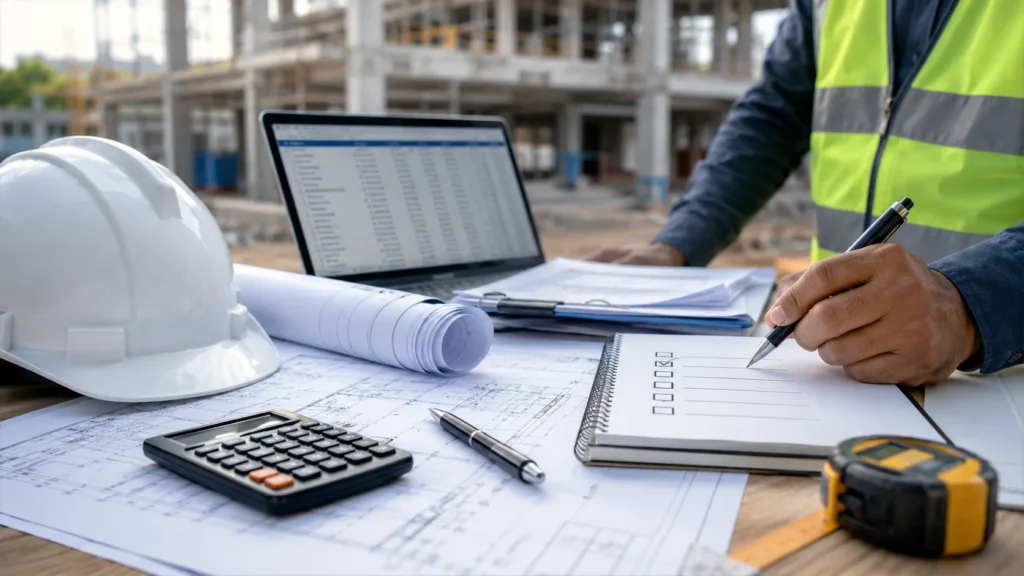
All successful builds have been in the works well before the first shovel is even put into the dirt. It begins with the documentation, planning and exact communication. One of the most critical and often poorly managed steps in a project’s life cycle is the requesting a construction cost estimate process for contractors, subcontractors and property owners.
Having a skill set in preparing construction cost estimates is one of the most important aspects of managing a building project. From minor home improvements to building a commercial property or large infrastructure projects, accurate estimates are essential for having a solid financial structure in place to keep everything going.
The ability to create construction cost estimates helps you to manage budgets, identify risks and manage timelines. The absence of an accurate and realistic projection can cause even the best planned project to quickly go into trouble, resulting in overspending, conflicts and delays.
This guide gives an overview and practical approach to preparing construction cost estimates. We will explore why estimates are important, the types of estimates throughout the industry, how to create an estimate step by step and how to improve your estimate-producing skills.
Why Preparation Matters When Requesting a Construction Cost Estimate
You can’t expect an estimator or a contractor to quote a price for something that you don’t know about or understand. If the person asking for a construction cost estimate does not have all the information, the estimator must make assumptions and assumptions do not usually lead to an accurate estimate. This is the most important factor that makes estimates come back too high, too low or with too many caveats and exclusions.
Professionalism will also be demonstrated by being organized in advance of requesting a construction cost estimate. When you send an estimate or bid with a clear scope, drawings and site information, it’s more likely for the estimator and/or contractor to be interested and to respond promptly. That responsiveness can be a key to helping or hindering a project in a competitive bidding process.
How to Prepare Construction Cost Estimates Step by Step
Step 1: What Information Should Be Gathered Before Requesting a Construction Cost Estimate?
All values are accurate when starting with good data. Gather drawings, specifications, site surveys, planning applications, and environmental reports. Often there is missing or incomplete information which results in miscalculations. In most cases, the documents required to prepare an estimate will depend on the size and complexity of the project and there are some categories that are common to most projects.
Always consider local requirements or site-specific requirements that may impact costs when preparing construction estimates. Sometimes, for instance, in a conservation area special materials or approvals will be necessary.
Step 2: How Is the Project Scope Broken Down?
With a clear understanding of the project, split it up into manageable chunks. When you contact an estimator or contractor to request an estimate, having a construction estimate request checklist can make the process quick, easy, and efficient! A Work Breakdown Structure (WBS) is commonly employed to divide up tasks like site prep, foundations, structure, roof and finishes.
The scope can be broken down into components and then the materials, labour and equipment can be quantified. It is also easier to make comparisons if you adopt a recognised system of structure like the New Rules of Measurement (NRM).
Step 3: How Are Materials, Labour, and Resources Quantified?
Accurate quantity take-offs are the backbone of how to prepare construction cost estimates. Work out for each task:
- The amount of materials used in construction (timber, steel, bricks, concrete etc.)
- Labour hours (if taking skill level and productivity rates into account)
- Needs to be identified in conjunction with the equipment and plant requirements.
This process can be made easier, but it is important to check manually to avoid errors, using digital tools like CostX or Bluebeam.
Step 4: How Are Market Prices Researched?
If you have an idea of the quantities, add realistic costs. This means you need to conduct market research that is up to date. The cost of materials can also vary, depending on the availability in the global supply chain, the cost of fuel or the seasonal demand for materials. Labour costs are dependent on the region and trade and the plant hire costs are determined by the duration of the job and transport charges.
If you are new to how to request an estimate, then they are very helpful when benchmarking against other reference documents like the BCIS or SPONS price books. Before you request a Construction Cost Estimate, this is important to note.
Step 5: What Overheads, Margins, and Contingencies Should Be Included?
An estimate by a professional would cover overheads like insurance, temporary utilities, site offices and legal fees, in addition to direct costs.
Profit margins are usually 10-20% and contingencies are typically 5-10% for contingencies that account for unforeseen events like changes in design or delays. The proper method of making construction cost estimates will take these indirect, though essential, costs into account.
Step 6: Which Estimating Tools Are Useful?
Depending on the size of the job, you may be able to use a spreadsheet for small projects but larger jobs will benefit from digital estimating. Common tools include:
- ProEst – cloud-based estimating
- BuilderTrend – great for smaller builders working on multiple projects
These will not only accelerate the process, but increase accuracy by minimizing manual error.
Step 7: How Should the Estimate Be Presented?
Once you know how to estimate construction costs, you’ll also know how to present them. Present information in an organised manner, summarise information by category, use charts or tables to show important information.
Be clear with assumptions and contingencies. A professional presentation makes people believe in you and boosts the chances of having their clients accept your work.
What Are the Types of Construction Cost Estimates?
In preparing construction cost estimates, it is important to understand that there are several different purposes served by an estimate. The levels of detail will vary by each stage of a project.
1. Preliminary Estimates
Preliminary Estimates made at the start of the planning. They give an immediate answer as to whether a project is viable or not.
2. Budget Estimates
Budget estimates are more detailed than preliminary figures and are frequently used to obtain project financing or to plan early stages of the project.
3. Detailed Estimates
All costs broken down including materials, labour, plant, overheads and contingencies. These tend to be employed for tendering.
4. Definitive Estimates
Completely accurate, based on final design, specification and supplier quotations. They are normally created just prior to the development.
Knowing how to use the appropriate estimate is a crucial component of the construction cost estimating process for a specific project and purpose.
Final Thoughts
Requesting a construction cost estimate is not simply a means of picking up the phone or sending an email; it’s about going into that conversation with organized info, clear expectations, and the proper documentation in hand. From the outset, a contractor and client can help make this process smoother, faster, and more accurate by determining scope at the beginning, knowing how to ask for an accurate construction estimate, using a construction estimate request checklist, collecting the necessary documents for an accurate estimate, and understanding realistic estimate turnaround time contractor benchmarks.
The work of preparing before asking for a construction cost estimate is not a burden; it’s the work that makes all subsequent steps easier.